

Sensory Exploration Toys for Infants: 10 Best Options
Table of Contents
- Why Sensory Exploration Toys Matter for Infant Development
- Benefits of Sensory Play for Infants
- Safe Materials for Baby Sensory Toys
-
10 Best Sensory Exploration Toys for Infants
- 1. Musical Baby Play Gym Mat With Kick Piano
- 2. Montessori Tummy Time Baby Pillow With Sensory Toys
- 3. Wooden Baby Musical Instrument Set - Montessori Rattles
- 4. Soft Silicone Baby Building Blocks & Sensory Balls
- 5. Baby Sensory Cloth Book Set - Soft Crinkle Learning Fun
- 6. Snail Suction Cup Spinner Toy - Sensory Travel Play
- 7. Soft Baby Crinkle Cloth Book Sensory Activity Toy
- 8. Silicone Highchair Suction Toy - Sensory Baby Play
- 9. Crocodile Wall Activity Board - Musical Sensory Panel
- 10. Montessori Toddler Busy Board - Preschool Learning Toy
- Montessori Sensory Toys for Babies: What Makes Them Different
- Sensory Play Ideas Using Household Items
- Budget-Friendly vs. Premium Sensory Toys: What's Worth the Investment
- Age-Appropriate Sensory Toys: Birth Through 12 Months
- Conclusion
Last Updated: August 23, 2026
Why Sensory Exploration Toys Matter for Infant Development
Babies learn through touch, sound, sight, and movement. From birth, infants are wired to explore their world through their senses, and this exploration is fundamental to brain development. Sensory exploration toys create structured opportunities for this natural learning, supporting cognitive growth, motor skill development, and early emotional regulation.
Intentional sensory experiences through toys, textures, sounds, and visual patterns directly influence neural pathways and motor coordination. When babies grasp a wooden rattle, follow a high-contrast pattern, or feel fabric crinkle, they're building foundations for fine motor skills, hand-eye coordination, and cognitive processing. Purpose-built sensory toys target specific developmental milestones while keeping safety paramount.
Benefits of Sensory Play for Infants
Sensory play activates multiple neural pathways simultaneously. Touch stimulates proprioception and vestibular awareness, helping babies understand their body's position in space. Sound develops auditory processing and can calm or stimulate depending on frequency and intensity. Visual tracking strengthens eye muscles and supports cognitive focus.
Babies who engage regularly with varied textures, sounds, and visual stimuli develop stronger neural connections in areas responsible for learning, memory, and problem-solving. Fine motor skills develop through tactile exploration: grasping soft blocks, squeezing crinkle toys, and reaching for spinners strengthen muscles and neural coordination required for later milestones like pinching and pointing.
Sensory play also supports emotional regulation. Certain sounds, textures, and visual patterns have naturally soothing effects on infants, helping them self-regulate when overstimulated or fussy. This is why a soft crinkle book or gentle musical toy is effective during transitions or wind-down times.
Safe Materials for Baby Sensory Toys
Safety is critical when selecting sensory toys. Babies explore by mouthing everything, so material choice matters. Non-toxic, BPA-free silicone and natural wood are gold standards because they're safe if chewed, durable, and easy to clean.
Look for toys explicitly tested for safety compliance. Soft fabrics should be tear-resistant and free from loose buttons or small parts. Wooden toys should be finished with non-toxic, food-grade sealants. The best sensory toys carry clear safety certifications from rigorous manufacturers.
Consider how toys will be cleaned. Fabric toys should be machine-washable or easily wiped. Silicone toys can be sterilised in boiling water or steam. Avoid toys with chemical odours, cracked surfaces, or loose components. The premium you pay for genuinely safe, high-quality toys is worth the peace of mind.
10 Best Sensory Exploration Toys for Infants
1. Musical Baby Play Gym Mat With Kick Piano
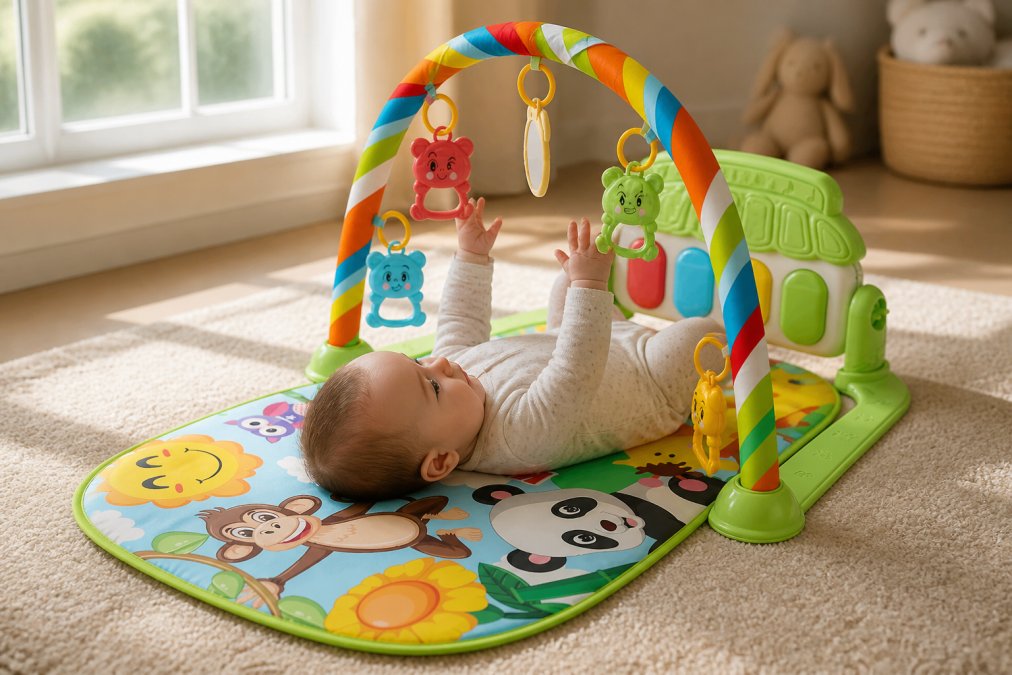
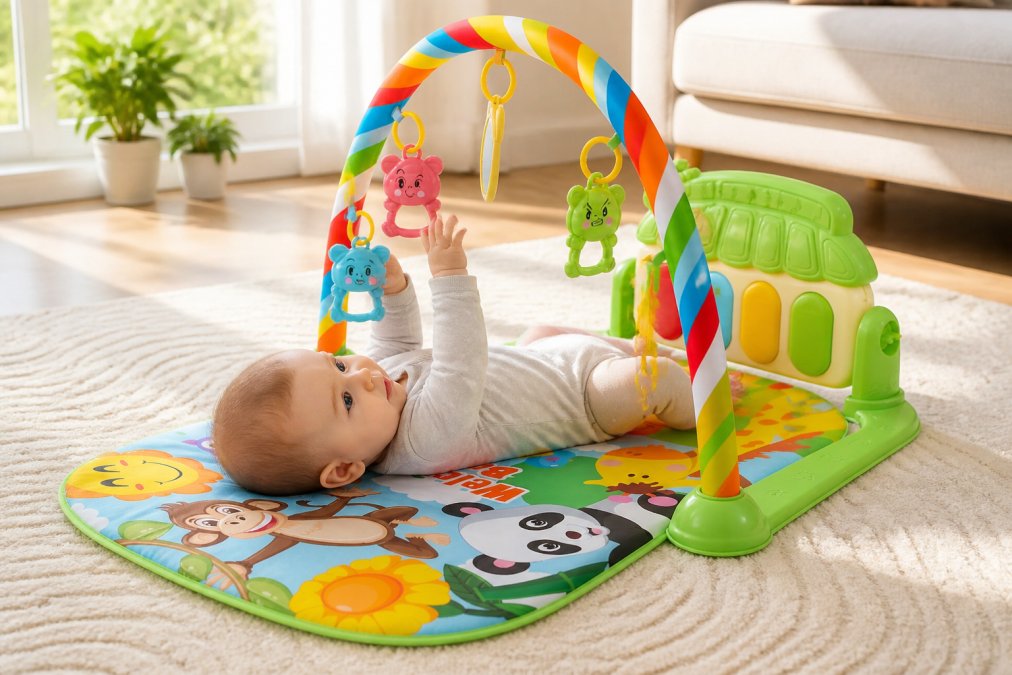
The Musical Baby Play Gym Mat combines multiple sensory inputs in one developmentally intelligent design. The kick-activated piano rewards natural leg movements with cheerful sounds, creating an immediate cause-and-effect learning loop. The soft, removable play mat supports tummy time, while hanging toys encourage reaching and grasping. The adjustable piano angle means the toy grows with your baby from back play through early sitting.

Babies quickly learn that their kicks produce sounds, accelerating their understanding of cause and effect. High-contrast hanging toys add visual tracking practice, and varied textures introduce tactile exploration.
Research on cause-and-effect learning in infant development
Starting Price: $47.00
Best For: Babies from birth through 6 months; tummy time and back play
2. Montessori Tummy Time Baby Pillow With Sensory Toys
This pillow solves a real problem: many babies resist tummy time, which is crucial for developing neck and shoulder strength. The pillow props your baby at an angle that reduces strain while making the experience engaging.
High-contrast details capture visual attention, supporting early visual focus and tracking. Attached sensory toys encourage reaching, strengthening arm muscles and hand-eye coordination. The soft cloth construction is gentle for daily use, and integrated toys mean fewer items to manage during tummy time.
Starting Price: $45.00
Best For: Babies 0-4 months; tummy time support and visual tracking
3. Wooden Baby Musical Instrument Set - Montessori Rattles
Natural wood offers genuine auditory exploration through wooden rattles, shakers, and bells that produce gentle, natural sounds. Babies grasp the instruments, shake them to produce sound, and experience visual movement. The smooth, warm wood surface feels different from silicone or plastic, providing better feedback for developing fine motor control.
The set encourages musical exploration without overwhelming. Each instrument produces a distinct sound, helping babies differentiate between tones and rhythms, supporting early auditory development.
Starting Price: $26.00
Best For: Babies 3-12 months; auditory development and grasping practice
4. Soft Silicone Baby Building Blocks & Sensory Balls
Soft silicone blocks are designed for the mouthing phase and are completely safe. Varied textures, smooth surfaces, ridged patterns, bumpy sections, provide rich tactile feedback. Lightweight, hand-sized shapes encourage independent grasping and exploration. Babies can eventually stack them around 6 months.
The cool, smooth surface is naturally soothing on sore gums, and varied textures give teething babies something genuinely satisfying to work with.
Starting Price: $45.00
Best For: Babies 3-12 months; mouthing, grasping, and teething relief
5. Baby Sensory Cloth Book Set - Soft Crinkle Learning Fun
Cloth books combine crinkle sounds, varied textures, and visual patterns in a portable format. The crinkle fabric introduces cause-and-effect (squeeze = sound), while different textures support tactile exploration. Animal themes and colour patterns capture visual attention without overwhelming.
Each page offers a distinct sensory experience: some crinkle, some feature different fabrics, some have hanging elements. The hanging loop works anywhere, attached to a pram, car seat, or play gym. Machine-washable construction handles drool and daily wear.
Starting Price: $37.00
Best For: Babies 0-12 months; portable sensory exploration and early learning
6. Snail Suction Cup Spinner Toy - Sensory Travel Play
The suction cup design sticks securely to high chair trays, car windows, or smooth tables, staying put while your baby plays. The rotating windmill design encourages visual tracking as the toy spins. Babies watch the motion, reach for it, and learn that their touch makes it move.
Fine motor practice is substantial: reaching, grasping, and manipulating the spinner build hand-eye coordination. The snail design adds playful engagement beyond generic spinners.
Starting Price: $30.00
Best For: Babies 4-12 months; visual tracking, reaching, and fine motor practice
7. Soft Baby Crinkle Cloth Book Sensory Activity Toy
This individual crinkle book focuses on one thing exceptionally well. The crinkle sound is satisfying without being jarring, and soft fabric pages are safe for aggressive mouthing. Lift-the-flap and peek-a-boo elements introduce early problem-solving; babies learn that hidden things can be found.
The hanging strap makes this a go-anywhere toy. Durable construction withstands repeated crumpling, squeezing, and chewing. Thoughtful layout sizes pages for baby hands to manipulate independently, with visual patterns supporting tracking without overstimulation.
Starting Price: $18.00
Best For: Babies 0-12 months; portable sensory play and early learning
8. Silicone Highchair Suction Toy - Sensory Baby Play
This highchair toy keeps little hands occupied during feeding, reducing mealtime stress. The stable suction base keeps it firmly attached to the tray. Varied shapes and bright colours are engaging without being chaotic.
The sensory design supports hand-eye coordination and fine motor skill development. Babies reach for it, grasp different shapes, and explore varied textures. This toy is designed for real parenting scenarios, offering developmental value and practical utility.
Starting Price: $24.00
Best For: Babies 6-12 months; highchair entertainment and fine motor practice
9. Crocodile Wall Activity Board - Musical Sensory Panel
This wall-mounted design saves floor space while creating a dedicated activity zone. The crocodile shape adds personality; multi-sensory features include xylophone, rotating cogs, wooden rasp, mirror, sliding beads, and shape maze.
The variety prevents toy exhaustion. Each element provides different sensory and motor challenges. The xylophone introduces cause-and-effect and early musical exploration. Rotating cogs teach mechanical principles. The mirror supports visual tracking and early self-awareness. Sliding beads develop fine motor control and hand-eye coordination.
A 6-month-old might be captivated by the mirror and sounds, while a 12-month-old engages with more complex mechanics. It's an investment piece that grows with your child.
Starting Price: $79.00
Best For: Babies 6-18 months; multi-sensory exploration and fine motor development
10. Montessori Toddler Busy Board - Preschool Learning Toy
While designed for toddlers, this busy board can be introduced to older infants (around 12 months) ready for complex problem-solving. The 20 preschool activities include zippers, buttons, snaps, and puzzles that develop real-world skills while supporting fine motor control.
The Montessori philosophy emphasises independence and self-directed learning. Your child explores activities at their own pace, discovering cause-and-effect relationships without adult direction. Non-toxic felt construction and reinforced hand-sewn parts signal genuine quality and durability.
Starting Price: $40.00
Best For: Babies 12+ months and toddlers; fine motor skills and independent exploration
| Toy | Starting Price | Best Age Range | Primary Benefit | Portability |
|---|---|---|---|---|
| Musical Baby Play Gym Mat | $47.00 | 0-6 months | Cause-and-effect learning | Low (stationary) |
| Montessori Tummy Time Pillow | $45.00 | 0-4 months | Tummy time support | Low (stationary) |
| Wooden Musical Instruments | $26.00 | 3-12 months | Auditory development | High |
| Silicone Building Blocks | $45.00 | 3-12 months | Tactile exploration | High |
| Sensory Cloth Book Set | $37.00 | 0-12 months | Multi-sensory learning | High |
| Snail Suction Spinner | $30.00 | 4-12 months | Visual tracking | Medium |
| Individual Crinkle Book | $18.00 | 0-12 months | Portable sensory play | High |
| Highchair Suction Toy | $24.00 | 6-12 months | Mealtime engagement | Medium |
| Crocodile Wall Board | $79.00 | 6-18 months | Complex exploration | Low (wall-mounted) |
| Toddler Busy Board | $40.00 | 12+ months | Fine motor skills | Medium |
Montessori Sensory Toys for Babies: What Makes Them Different
Montessori-inspired sensory toys are built on a specific philosophy: children learn through self-directed exploration in carefully prepared environments. This isn't random play; it's purposeful engagement with materials that have inherent educational value.
A Montessori toy invites active exploration and problem-solving rather than passive entertainment. A Montessori rattle has a specific weight, size, and sound that encourages grasping practice and auditory discrimination. A Montessori sensory board offers varied, distinct experiences that invite focused attention without overwhelming.
Montessori toys respect a child's natural developmental timeline. They meet babies where they are developmentally and provide the next challenge without frustration. This builds confidence and intrinsic motivation; babies engage because the toy itself is genuinely interesting.
Natural materials, wood, soft fabrics, and high-quality silicone, are preferred over plastic and electronics because they provide richer sensory feedback and communicate quality and care. At Lulliyotoys, our Montessori-inspired collection emphasises this philosophy. The Wooden Baby Musical Instrument Set, for example, introduces auditory discrimination and fine motor development in a way that respects the infant's natural curiosity.

Sensory Play Ideas Using Household Items
You don't need to buy every toy to support sensory exploration. Household items can be equally engaging when used thoughtfully and safely.
A soft scarf or chiffon fabric offers rich tactile and visual experiences. Babies love the way it moves, the texture against their skin, and how it responds to their touch. Drape it loosely over a play gym or let your baby hold it during tummy time.

Wooden spoons provide auditory exploration. Let your baby tap spoons together (under supervision) to discover cause-and-effect. The sound differs from plastic toys, and the weight provides better sensory feedback. A wooden spoon is safe for mouthing, easy to clean, and genuinely engaging.
Textured household items like soft blankets, towels, and cushions create a sensory exploration environment. Create a small "sensory corner" with varied fabrics and let your baby explore independently.
A clean mirror or reflective surface supports early self-awareness and visual tracking. Babies are fascinated by their own reflection, supporting cognitive development. Place a baby-safe mirror at your infant's level during tummy time.
Water play (with supervision) offers rich sensory input. Babies aged 6+ months can explore water in a shallow container, experiencing temperature, movement, and splashing sounds.
The key is safety first and thoughtful setup second. Remove choking hazards, ensure items are clean and free from sharp edges, and supervise constantly.
Budget-Friendly vs. Premium Sensory Toys: What's Worth the Investment
The sensory toy market ranges from budget options under $15 to premium sets over $100. The question isn't which price point is "better," but which offers genuine value for your situation.
Budget toys ($15-30) can be effective if well-designed. The Individual Crinkle Book at $18.00 or Wooden Musical Instruments at $26.00 deliver real developmental benefit without premium pricing. The trade-off is often durability and material quality; a $15 plastic toy might work for months before buttons break.
Mid-range toys ($30-50) represent the sweet spot for most families. The Musical Baby Play Gym Mat at $47.00 or Silicone Building Blocks at $45.00 offer genuine quality, material safety, and developmental value without premium pricing. These toys typically last through multiple children.
Premium toys ($60+) are worth considering for longevity or single investment pieces that grow with your child. The Crocodile Wall Activity Board at $79.00 offers 12+ months of engagement without consuming floor space. For families planning multiple children, the cost-per-use becomes reasonable.
Developmental value doesn't scale linearly with price. A $26 wooden instrument set supports auditory development as effectively as a $150 electronic alternative. Higher price points often reflect durability, material quality, and design thoughtfulness rather than additional developmental benefit.
Start with 3-4 core mid-range toys matching your baby's developmental stage, supplement with budget options for variety, and consider premium pieces only for multiple children or long-term use.
Age-Appropriate Sensory Toys: Birth Through 12 Months
Birth to 3 months: Newborns develop visual focus and begin tracking movement. High-contrast patterns, gentle sounds, and soft textures are most appropriate. The Montessori Tummy Time Baby Pillow and Individual Crinkle Book work well because they're low-stimulation and support early visual tracking.
3 to 6 months: Babies develop reaching accuracy and intentional grasping. Toys that reward reaching and grasping are perfect. The Musical Baby Play Gym Mat, Wooden Musical Instruments, and Soft Silicone Building Blocks support this stage. Cause-and-effect play becomes engaging; toys that respond to baby's actions are irresistible.
6 to 9 months: Fine motor skills develop rapidly, and babies are interested in manipulation. Toys with varied textures and toys that require different grasping types are ideal. The Snail Suction Spinner, Highchair Suction Toy, and Sensory Cloth Book Set work well. Babies become more interested in cause-and-effect and early problem-solving.
9 to 12 months: Babies develop independence and more complex motor skills. Toys inviting self-directed exploration and gentle challenges are appropriate. The Crocodile Wall Activity Board and Toddler Busy Board appeal at this stage.
Observe your baby's actual engagement rather than rigidly following age guidelines. If your 5-month-old is fascinated by the Crocodile Wall Board, they're ready for it. If your 12-month-old prefers simple crinkle toys, that's equally valid.
Developmental milestones and sensory development in infants
Conclusion
Sensory exploration toys for infants support fundamental developmental processes happening in your baby's brain during the first year. The right toys invite curiosity, support motor development, encourage auditory and visual discrimination, and create opportunities for learning through play.
The Lulliyotoys collection is designed specifically for this purpose. From the Musical Baby Play Gym Mat introducing cause-and-effect learning to the Wooden Baby Musical Instrument Set supporting auditory development, each toy is selected for genuine developmental value and material quality. Start with toys matching your baby's current stage, observe what genuinely engages them, and expand from there.
Intentional sensory engagement during infancy has lasting benefits for cognitive and motor development. Research on early sensory experiences and brain development confirms this. Begin with Lulliyotoys and discover how thoughtfully designed, high-quality sensory exploration toys transform everyday moments into genuine learning experiences. Your baby's curiosity is their greatest teacher; the right toys simply create the space for that natural learning to flourish.
Frequently Asked Questions
What are the best sensory exploration toys for newborns aged 0-3 months?
Newborns benefit most from high-contrast patterns, gentle sounds, and safe textures they can hold and mouth. The Montessori Tummy Time Baby Pillow with Sensory Toys ($45) offers visual stimulation and tactile exploration, whilst soft crinkle cloth books ($18-$37) provide auditory and tactile feedback. Focus on toys with varied textures, soothing sounds, and lightweight designs that support grasping reflex development.
How do sensory toys support fine motor skills and hand-eye coordination?
Sensory toys encourage babies to reach, grasp, shake, and manipulate objects, building hand-eye coordination and fine motor control. The Snail Suction Cup Spinner ($30) promotes visual tracking through rotating movement, whilst the Soft Silicone Building Blocks ($45) develop gripping strength and dexterity. These actions strengthen the muscles and neural pathways needed for later writing, feeding, and self-care skills.
What safety standards should sensory toys meet, and how can I verify they're safe?
Sensory toys for infants should meet relevant safety standards for products sold in your market, including non-toxic materials, BPA-free construction, and secure fastening of small parts. Look for products clearly labelled with safety certifications and materials. All Lulliyotoys sensory toys are carefully selected for safety and quality, feature non-toxic materials, and come with a 30-day return policy so you can purchase with confidence.
Are Montessori-inspired sensory toys genuinely better for infant development, or is that marketing?
Montessori toys emphasise open-ended, self-directed exploration rather than single-purpose play. This approach aligns with how infants naturally learn through trial, error, and curiosity. Products like the Wooden Baby Musical Instrument Set ($26) and Crocodile Wall Activity Board ($79) encourage independent discovery, which research supports as beneficial for cognitive development, problem-solving, and sustained engagement, not just marketing language.
How can I choose sensory toys my infant will actually use rather than abandon quickly?
Rotate toys every 2-3 weeks to maintain novelty and engagement. Choose toys with multiple sensory elements (sound, texture, visual interest) so they appeal across different moods and developmental stages. Start with versatile, grow-with-baby options like the Musical Baby Play Gym Mat ($47), which adapts from back play to tummy time to sitting. Observe what captures your infant's attention, some babies prefer sound, others texture, and build a collection around their sensory preferences.
This article was written using GrandRanker