

Benefits of Open-Ended Wooden Toys for Child Development
Table of Contents
- What Open-Ended Play Means for Early Development
- How Open-Ended Wooden Toys Build Cognitive Skills
- Fostering Creativity and Imaginative Play
- Fine Motor Skills and Hand-Eye Coordination
- Montessori Toy Benefits and Child-Led Learning
- Social and Emotional Development Through Play
- Best Wooden Stacking Toys for Toddlers and Developmental Stages
- Non-Toxic Wooden Toys and Safety Standards
- Durability and Longevity: Why Quality Matters
- Conclusion
Last Updated: August 22, 2026
What Open-Ended Play Means for Early Development
Open-ended wooden toys are playthings without a predetermined outcome or single correct way to use them. A wooden block can become a building, a bridge, a road, or part of a story. The child decides. This fundamental difference from closed-ended toys (those with one purpose or solution) shapes how young minds develop during those critical early years.
When your toddler picks up a wooden block, they're not following instructions. They're making decisions. That agency matters more than most parents realise. Open-ended play invites problem-solving, imagination, and genuine curiosity because the toy doesn't dictate the answer. Instead, it invites the question: what could this become?
The benefits of open-ended wooden toys extend far beyond entertainment. Research into child development consistently shows that unstructured, self-directed play builds cognitive flexibility, emotional resilience, and social skills in ways that structured activities simply cannot replicate (peer-reviewed research). When children lead their own play, they're practising independence, testing hypotheses, and learning from their own mistakes without adult intervention constantly steering them toward the "right" answer.
Montessori education has emphasised this principle for over a century: give children purposeful, beautiful tools and step back. The learning happens in the doing, not in the instruction. Open-ended wooden toys align perfectly with this philosophy because they respect the child's natural drive to explore, create, and understand their world on their own terms.
How Open-Ended Wooden Toys Build Cognitive Skills
Open-ended play isn't just fun, it's where serious cognitive development happens. When children engage with toys that don't have a fixed purpose, their brains are forced to think creatively, plan ahead, and adapt when their initial ideas don't work out. These aren't small skills. They're the foundation for everything from academic success to emotional regulation.
Problem-solving and working memory
The moment a child decides to build a tower and it topples, they face a genuine problem. Not a puzzle with one correct answer, but a real challenge requiring thought. Should they stack differently? Use larger blocks at the base? Try a narrower design? Each attempt builds working memory, the ability to hold multiple pieces of information in mind while manipulating them.
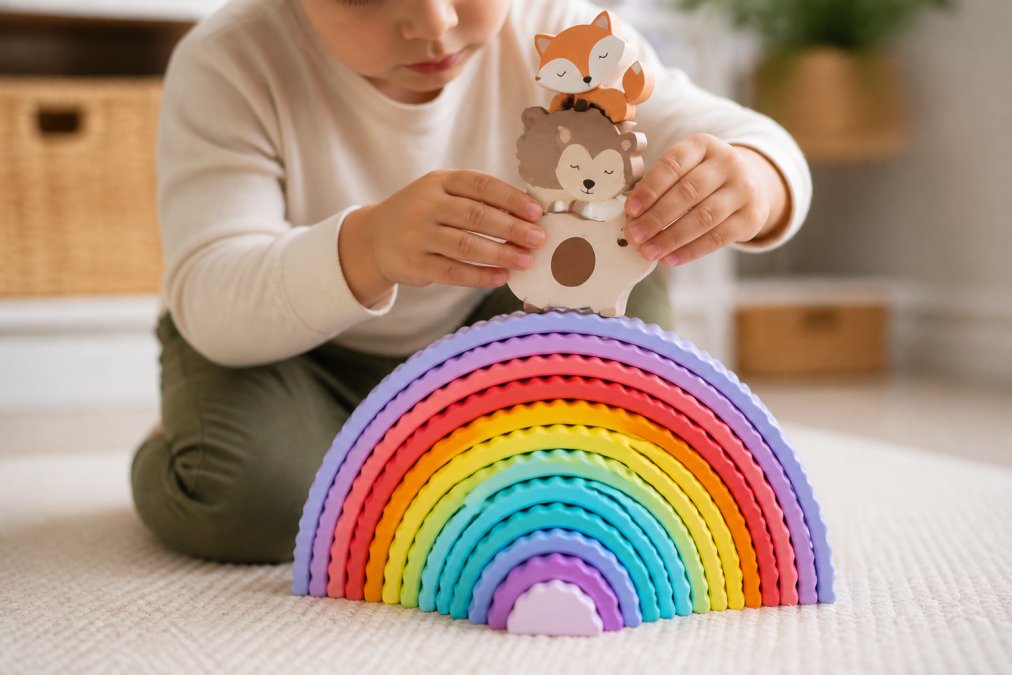
Open-ended wooden toys demand this kind of thinking constantly. A child stacking animal balance blocks isn't following a manual. They're experimenting with weight distribution, spatial relationships, and cause-and-effect. When the tower falls, they don't blame the toy for being "wrong." They adjust their approach. That's problem-solving in its purest form, and it's exactly what develops executive function and critical thinking.

The beauty of this process is that it happens naturally, without pressure. The child isn't being tested. They're simply playing, and their brain is building neural pathways that support reasoning, planning, and adaptability, skills that matter far more than memorising facts.
Spatial awareness and critical thinking
Spatial awareness, understanding how objects relate to one another in three-dimensional space, develops through hands-on manipulation. Wooden blocks and stacking toys force children to think about balance, proportion, and positioning. How high can this go before it tips? Where should I place this piece to keep everything stable?
These questions aren't abstract. They're concrete, physical challenges that demand spatial reasoning. Over time, children develop an intuitive understanding of geometry, physics, and spatial relationships that serves them in everything from reading maps to solving mathematical problems years later.
Critical thinking grows from this same process. When a child experiments with different stacking configurations, they're forming hypotheses, testing them, and drawing conclusions. That's the scientific method, practised naturally through play. Open-ended toys don't teach this process through instruction, they invite it through exploration.
Fostering Creativity and Imaginative Play
Creativity doesn't emerge from following a template. It emerges from freedom. Open-ended wooden toys offer exactly that: the freedom to imagine, create, and reimagine without constraints.
When a child has a set of wooden blocks, they don't see "blocks." They see potential. A castle, a bridge, a train track, a family home. The same toy becomes different things depending on the child's mood, the story they're telling, or the friend they're playing with. This flexibility of thinking, the ability to see an object as multiple things simultaneously, is what creativity actually is.
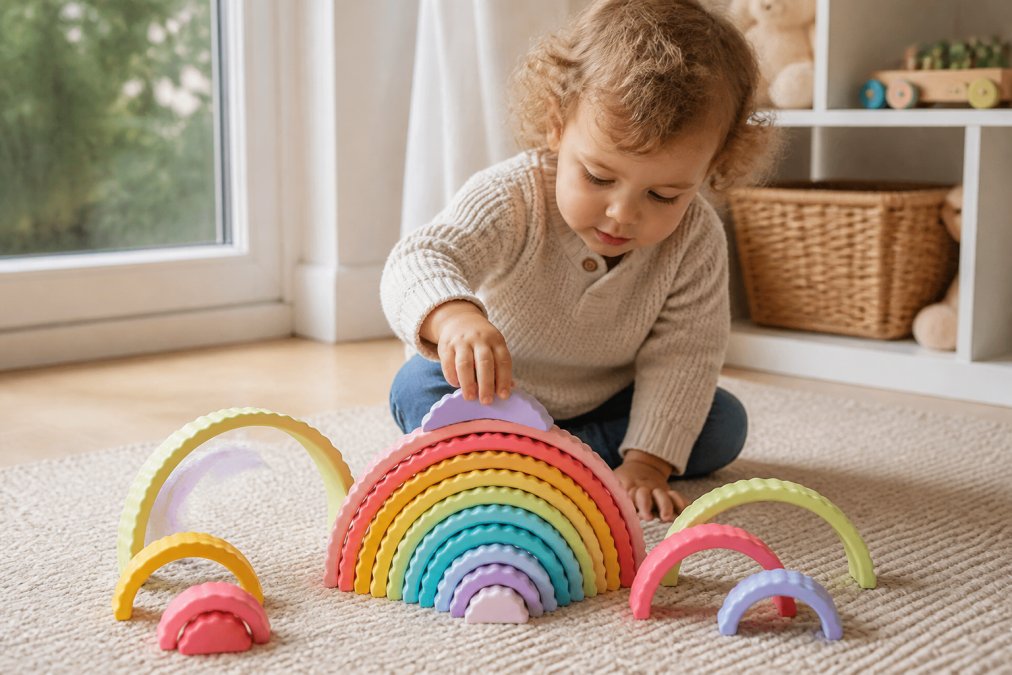
Imaginative play through open-ended toys also builds narrative thinking. Children create stories, characters, and scenarios. They're not passively consuming a predetermined narrative from a screen. They're authors, directors, and actors all at once. This kind of active storytelling develops language, social understanding, and emotional intelligence because children are exploring different perspectives and situations through their play.
The research on imaginative play is consistent: children who engage in sustained, child-led imaginative play show stronger creative problem-solving abilities, better emotional regulation, and more flexible thinking patterns (peer-reviewed research). Open-ended wooden toys support this kind of play naturally because they don't prescribe a single narrative or outcome.
Fine Motor Skills and Hand-Eye Coordination
Fine motor development, the coordination and strength of small muscles in hands and fingers, is essential for everything from writing to self-care. Open-ended wooden toys, particularly stacking and balancing toys, demand precise hand control.
Picking up a small wooden block requires finger dexterity. Placing it carefully on top of another block without toppling the structure demands hand-eye coordination and steady control. Balancing animal shapes on a fulcrum requires even more precision. These aren't abstract exercises. They're real physical challenges that naturally develop the exact skills children need.
Repetition matters here. A child who spends 20 minutes carefully stacking blocks is practising fine motor control repeatedly, with immediate feedback. When the tower falls, they know instantly that their grip or placement needs adjustment. This kind of natural consequence-based learning is far more effective than formal fine motor exercises because the child is motivated by their own goal, not adult instruction.
The dexterity developed through open-ended wooden toys translates directly to other skills. Children who've spent significant time building and balancing typically show stronger pencil grip, better scissor control, and more confident handwriting when they reach school age.
Montessori Toy Benefits and Child-Led Learning
Montessori education is built on a simple principle: follow the child. Observe what interests them, provide appropriate materials, and step back. Open-ended wooden toys are perfectly aligned with this approach because they invite self-directed learning without adult prescription.
In a Montessori environment, a wooden toy isn't presented with instructions. It's simply available. The child chooses it, explores it, and discovers its possibilities. If they stack the blocks into a tower, that's their learning path. If they line them up, that's valid too. If they use them as characters in an imaginary story, that's equally valuable. The toy doesn't judge. It simply responds to the child's creativity.
This child-led approach has profound implications for motivation and learning. When children choose their own activities, they're intrinsically motivated. They persist longer, concentrate more deeply, and feel genuine satisfaction from their discoveries. Compare this to a toy that demands a specific outcome: the child either succeeds or fails, and learning is tied to external evaluation rather than internal drive.
Lulliyotoys designs toys specifically with this philosophy in mind. The Montessori Wooden Rainbow Blocks and wooden animal balance stacking toys are created to invite exploration without prescription. They're beautiful enough to be displayed, open-ended enough to sustain hours of play, and developmentally appropriate for the ages they're designed for. This is the difference between a toy that educates and a toy that entertains, one respects the child's agency, the other prescribes it.

Social and Emotional Development Through Play
Open-ended play isn't solitary. When children play together with open-ended toys, they negotiate, collaborate, and navigate social complexity in real time. These interactions build social and emotional skills that no screen-based toy can develop.
When two toddlers are building with wooden blocks, they face genuine social challenges. Whose turn is it? How do we combine our ideas? What happens when one child knocks over what the other built? These aren't abstract social lessons. They're lived experiences that teach compromise, empathy, and conflict resolution.
Emotional regulation also develops through open-ended play. When a tower falls, the child experiences frustration, but they also have agency to try again. They're not dependent on an adult to "fix" the toy. They can adjust their approach and try once more. This repeated cycle of trying, failing, and trying differently builds resilience and emotional flexibility.
Open-ended toys also support emotional expression. A child who's anxious might build a fortress. A child who's joyful might create elaborate structures. A child processing loss might knock things down and rebuild. These are all valid uses of the toy, and each one serves emotional processing that supports development.
Best Wooden Stacking Toys for Toddlers and Developmental Stages
Choosing the right open-ended wooden toys means understanding what skills your child is developing at each stage and recognising the signals that indicate readiness for more complex play. Not all wooden toys are equally beneficial at every age, and matching toys to developmental readiness maximises both engagement and learning. The key is understanding not just age, but the specific motor, cognitive, and social milestones your child is reaching.
Infants aged 6-12 months: Sensory exploration and grasping
Infants at this stage are developing basic grasping reflexes and beginning to understand cause-and-effect through repetitive action. Their play is primarily sensory: they explore objects by mouthing, shaking, dropping, and watching what happens. Toys should be lightweight enough for small hands to lift (under 100 grams), large enough to be safe (no small parts), and interesting enough to hold attention for short bursts (30 seconds to 2 minutes).
Simple wooden blocks, rings on a post, or wooden rattles work well because they invite repetitive action without requiring complex problem-solving. The child's primary learning at this stage is sensory: How does this feel? What sound does it make? What happens when I drop it? Look for toys with varied textures (smooth, slightly textured, ridged) and natural wood tones that provide visual interest without overstimulation.
Watch for readiness signals: your infant can sit upright with minimal support, transfers objects from one hand to the other.
Non-Toxic Wooden Toys and Safety Standards
Safety is non-negotiable when it comes to toys for young children. Open-ended wooden toys are inherently safer than many plastic alternatives, but not all wooden toys are created equal. Understanding what to look for ensures your child is playing with genuinely safe materials.
Natural wood is inherently less toxic than plastic because it doesn't contain microplastics or off-gas harmful chemicals. However, the finishes, adhesives, and paints used on wooden toys matter significantly. Toys designed for babies and toddlers should be finished with food-grade, non-toxic stains or oils that won't harm a child who mouths them (and they will).
Look for toys certified to meet relevant safety standards. In Australia, toys should comply with Australian Consumer Law requirements and ideally meet international standards like ISO 8124 (toy safety) (iso.org). Reputable manufacturers provide clear information about their materials, finishes, and testing. If a toy doesn't clearly state what it's made of or how it's finished, that's a red flag.
Lulliyotoys prioritises safety across its entire collection. Their wooden toys are made from sustainable materials with non-toxic finishes specifically chosen for safety with young children. This commitment to safety standards means you can focus on the developmental benefits without worrying about hidden chemicals or unsafe materials.
Durability and longevity also relate to safety. A toy that splinters or breaks apart creates hazards. Well-made wooden toys from quality manufacturers remain intact through years of use, which means they're safer and represent better value for families.
Durability and Longevity: Why Quality Matters
Open-ended wooden toys are an investment, not a disposable purchase. This is precisely why quality matters so much, and why understanding how to care for them ensures they deliver value across years and multiple children. A well-made wooden toy can be used by multiple children, stored safely for years, and passed down through families. A poorly made toy falls apart, splinters, or becomes unsafe, and it ends up in landfill.
The durability of wooden toys directly impacts their value. A toy that costs more upfront but lasts for years, and can be used by siblings or passed to other families, is actually more affordable than cheap plastic toys that break within months. This is true economically and environmentally.
Cleaning and maintenance
Wooden toys require minimal care, but the right approach extends their life significantly. Most wooden toys should be wiped clean with a slightly damp cloth and dried immediately. Avoid soaking or prolonged water exposure, which can cause swelling or warping. For stubborn marks or food residue, a soft cloth with mild soap and warm water works well, just ensure the toy dries completely within minutes.
For toys finished with natural oils or beeswax (common on quality wooden toys), periodic re-oiling maintains the wood's appearance and protective coating. Once or twice yearly, apply a food-grade mineral oil or beeswax balm to the toy's surface, buffing gently with a soft cloth. This keeps the wood from drying out and maintains the natural patina that develops with use. Never use harsh cleaners, bleach, or abrasive scrubbers, which damage both the wood and any protective finish.
Storage matters too. Keep wooden toys in a dry environment away from direct sunlight, which can fade natural wood tones over time. A toy box or shelf in a cool, dry room is ideal. Avoid damp basements or hot attics where temperature and humidity fluctuations can cause wood to crack or warp.
Repair and restoration
Minor damage is often cosmetic and doesn't affect safety or function. Small scratches, dents, or colour changes are signs a toy has been loved and used. However, some damage warrants attention. Splinters, cracks, or loose joints need addressing before the toy is used again.
Splinters can usually be sanded smooth with fine-grit sandpaper (220-grit or higher). Sand gently in the direction of the wood grain, then wipe away dust and re-oil if needed. For small cracks, wood filler designed for toys can be applied, sanded smooth, and re-finished. Loose joints or wobbling pieces may indicate that adhesive has weakened; this is where quality matters, toys made with proper wood joinery or high-quality adhesives rarely develop these issues, but if they do, a woodworker or toy maker can often repair them.
Before discarding a broken toy, contact the maker to ask about repair options. This extends the toy's life and models sustainable consumption for your child.
Passing toys forward
One of the greatest advantages of durable wooden toys is their ability to be passed between siblings, cousins, or friends. Before passing a toy on, inspect it thoroughly for safety: check for splinters, loose parts, or damage that might make it unsafe. Clean it well, repair any issues, and it's ready for the next child. This practice reduces waste, saves families money, and creates a sense of continuity and care around objects.
Many families create toy libraries or hand-down systems within their community, sharing wooden toys across multiple children. This is possible precisely because wooden toys, when well-made and properly maintained, remain safe and functional for years. A wooden block set used by one child for three years can then be used by another for three years, and another after that, multiplying the value and reducing the environmental impact per child served.
Quality wooden toys are also more beautiful. This matters more than it might seem. When toys are genuinely beautiful, children interact with them differently. They treat them with more care. Parents display them proudly rather than hiding them away. The aesthetics of the toy actually support the child's relationship with it and their willingness to preserve it for others.
When you choose open-ended wooden toys from quality makers, you're investing in toys that will genuinely last. The Montessori Rainbow Arch Blocks and wooden animal balance toys are designed to be used intensively and still remain beautiful and functional after years of play. With basic care and minor maintenance, these toys become part of your family's story, used and enjoyed across years and by multiple children.

Frequently Asked Questions
Q: What makes open-ended wooden toys different from closed-ended toys?
A: Open-ended wooden toys have no single 'correct' way to play, a wooden block can become a building, a bridge, or part of a story. Closed-ended toys have one function (like a puzzle with set pieces). Open-ended toys encourage problem-solving, creative freedom, and child-led play, allowing children to direct their own learning and imagination without predetermined outcomes.
Q: How do Montessori toy benefits support my child's development?
A: Montessori toys are designed around child-led learning and independence. They encourage self-correction, sensory exploration, and purposeful activity. Montessori toy benefits include building executive function, self-regulation, and a growth mindset. These toys respect the child's pace and developmental stage, fostering agency and confidence as they master skills independently.
Q: Are non-toxic wooden toys Australia certified, and what should I look for?
A: Quality non-toxic wooden toys should meet or exceed standards set by the Australian Competition and Consumer Commission (ACCC). Look for certifications such as FSC (Forest Stewardship Council) for sustainable sourcing, and products tested for harmful substances. Reputable makers provide safety documentation and use natural, non-toxic finishes. Always check product descriptions for material transparency and third-party testing verification.
Q: Will my toddler actually stay interested in open-ended toys, or will they end up in the donation pile?
A: Open-ended toys have remarkable longevity because they grow with your child. A wooden block set used for stacking at 18 months becomes a construction project at 3 years and a storytelling prop at 5. Because there's no 'solved' state, children return to them repeatedly in new ways. Quality wooden toys also withstand years of use, making them worth the investment and often passed down to younger siblings.
This article was written using GrandRanker