

Why Choose Montessori Toys for Early Development
Table of Contents
- What Makes Montessori Toys Different from Ordinary Play
- How Montessori Toys Support Cognitive Development
- Montessori Toys for 1 Year Old: Age-Appropriate Play
- Building Fine Motor Skills Through Purposeful Play
- Natural Materials and Sensory Exploration
- Montessori Toy Safety Standards in Australia
- Minimalist Toy Rotation Guide for Sustained Engagement
- Independence and Intrinsic Motivation Through Play
- Budget-Friendly Alternatives and DIY Montessori Ideas
- Integrating Montessori Play into Non-Montessori Households
Last Updated: August 21, 2026
What Makes Montessori Toys Different from Ordinary Play
Montessori toys are designed around child-directed learning, prioritising development over entertainment. Rather than flashing lights and predetermined sounds, they invite open-ended exploration and purposeful play that engages natural curiosity.
The core difference lies in intentionality. A standard toy keeps a child occupied; a Montessori toy invites problem-solving, fine motor engagement, and sensory exploration simultaneously. These toys feature simple design, natural materials, and minimal visual clutter, creating a "prepared environment" that reduces overstimulation and allows genuine focus.
At Lulliyotoys, we design with this philosophy at the centre. Each toy serves a specific developmental purpose, whether building hand-eye coordination through shape sorting or developing spatial awareness with stacking blocks. Real wood, untreated fabric, and natural finishes provide authentic tactile feedback that plastic alternatives cannot match.

Children develop through manipulation, exploration, and discovering cause-and-effect relationships themselves. A Montessori toy removes the barrier between curiosity and learning; the child becomes the active agent, not an audience. When children engage in purposeful play with materials that respond predictably to their actions, they build executive function, concentration, and intrinsic motivation simultaneously.
How Montessori Toys Support Cognitive Development
Cognitive development depends on repeated, self-directed exploration of materials that provide immediate, predictable feedback. Montessori toys excel here because they're designed as learning tools, not entertainment devices.
When a toddler places shapes through matching holes, they're building spatial reasoning, problem-solving skills, and hand-eye coordination. Each failed attempt teaches something; each success reinforces learning. This cycle of trial, feedback, and refinement is how young brains wire themselves for complex thinking.
Open-ended toys that allow multiple solutions develop flexible thinking. A wooden block can be a tower, bridge, wall, or pattern, the child decides. This trains the brain to see possibilities rather than follow predetermined paths. Research consistently shows that children who engage in self-directed, open-ended play demonstrate stronger problem-solving abilities and greater creative confidence by school age.
Concentration is another critical skill Montessori toys support. Toys with single, clear purposes invite sustained focus. When a child becomes absorbed in fitting pieces together, they build neural pathways for attention and persistence. Minimalist design matters here too: fewer toys with greater depth encourage longer focus on each one.
Montessori Toys for 1 Year Old: Age-Appropriate Play
At one year old, children transition from sensory exploration to purposeful grasping, releasing, and simple cause-and-effect understanding. Montessori toys for this age focus on these emerging skills.
The ideal toys feature grasping objects with varied textures and weights, cause-and-effect toys with immediate repeatable results, natural materials providing authentic sensory feedback, and simple single-purpose designs that don't overwhelm.
A wooden ring stacker allows a child to grasp, lift, and place rings on a post. Each action is intentional and teaches spatial understanding. Lulliyotoys' Montessori Wooden Color & Shape Sorting Puzzle invites exploration of shape recognition and fine motor control. At one year, a child might simply grasp pieces; by 18 months, they'll attempt to fit shapes through holes; by two years, they'll succeed with intention.

Safety is paramount at this age. Australian safety standards require non-toxic finishes and materials free from small-part hazards. Toys should be large enough that they cannot be swallowed and should have no sharp edges or splinters.
Avoid overstimulation: a one-year-old needs three to five high-quality options that invite repeated, varied exploration rather than ten toys.
Building Fine Motor Skills Through Purposeful Play
Fine motor skills develop through repetitive, intentional manipulation of objects. Montessori toys specifically designed for fine motor development accelerate this process by providing materials that demand increasingly sophisticated hand control.
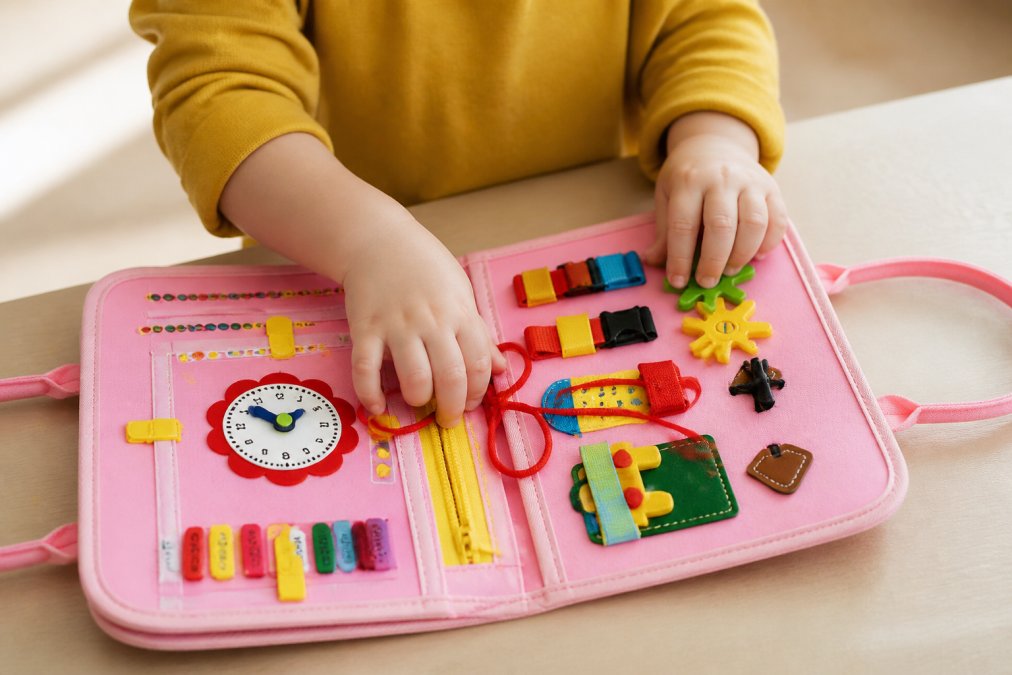
Shape-sorting puzzles, threading beads, and stacking toys build fine motor competence through purposeful play. When a child concentrates on fitting a star shape through a star-shaped hole, they're strengthening hand muscles, developing hand-eye coordination, and learning spatial relationships simultaneously.
The progression matters. A toy that's too simple won't challenge developing muscles; one that's too complex frustrates. Montessori design solves this through "self-correction": a shape either fits or it doesn't. The child discovers the solution through trial without needing adult intervention, building both fine motor strength and problem-solving confidence.
Lulliyotoys' Montessori Wooden Bear Shape Sorting & Stacking Toy exemplifies this approach. Varying shapes and sizes demand increasingly precise hand positioning as the child progresses. Fine motor development also connects to later literacy and numeracy skills. Real wood provides weight and resistance that plastic cannot, training hand control more effectively.
Natural Materials and Sensory Exploration
Sensory exploration is how young children build understanding of the physical world. Natural materials, wood, untreated fabric, natural rubber, provide authentic sensory feedback that synthetic alternatives cannot replicate.
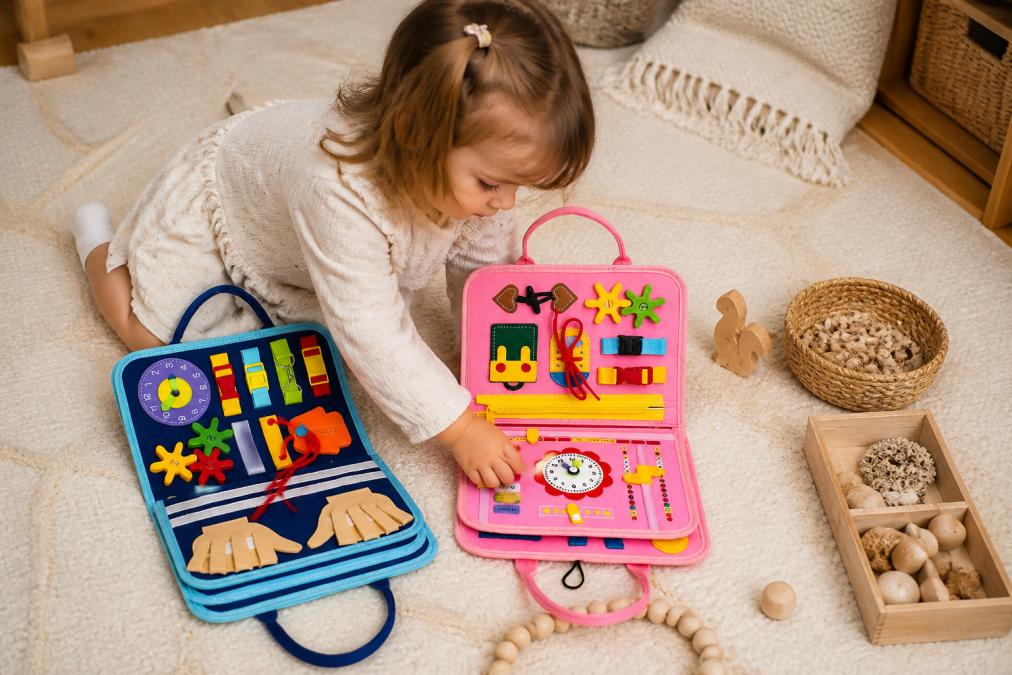
Wood has temperature properties that change with the room, grain patterns that vary, and responds to force predictably. These properties teach the child about material behaviour through direct experience. Plastic feels uniform and unchanging.
Natural materials reduce overstimulation. A wooden toy doesn't flash, beep, or sing; it invites the child's own imagination. This restraint is developmentally valuable, allowing the child's brain to focus on the toy itself rather than competing for attention against artificial stimuli.
Tactile feedback from natural materials builds proprioceptive awareness, the child's understanding of their own body in space. When a child grasps wooden beads, they feel resistance, weight, and texture. This sensory information feeds directly into motor development and spatial reasoning.
Lulliyotoys prioritises natural, sustainably sourced materials across our collection. The Montessori Wooden Mushroom Imaginative Play Set uses FSC-certified wood with non-toxic finishes. Natural materials also age gracefully, teaching children that objects have lifecycles.
Montessori Toy Safety Standards in Australia
Australian safety standards are among the world's most rigorous. Toys must comply with AS/NZS ISO 8124 safety standards, which cover mechanical hazards, flammability, and chemical safety, specifically addressing choking risks, sharp edges, small-part hazards, and toxic substance limits.
Non-toxic finishes are non-negotiable. Toys marketed as "natural" sometimes use finishes that aren't food-safe, problematic when a one-year-old puts everything in their mouth. Look for finishes certified as food-grade or explicitly tested for oral contact safety. Water-based, non-toxic stains and oils meet this requirement.
FSC certification (Forest Stewardship Council) ensures wood comes from responsibly managed forests, indicating a manufacturer's commitment to quality control throughout the supply chain. Lulliyotoys uses only non-toxic finishes across our collection, with products tested to exceed Australian safety standards.
Small parts remain the most serious hazard for children under three. Any toy with removable pieces smaller than a toilet paper tube presents a choking risk. If uncertain whether a toy is safe for your child's age, err toward caution.
Minimalist Toy Rotation Guide for Sustained Engagement
A common parental frustration is watching a child lose interest in toys within weeks. The culprit is usually toy overload, not the toys themselves. Too many options overwhelm young brains and reduce engagement depth.
The minimalist toy rotation approach solves this by limiting available toys and rotating them periodically. Curate a core collection of 8-12 high-quality toys spanning different developmental areas. Keep 3-5 toys accessible at any time; store the remainder out of sight. Rotate every 2-4 weeks. Remove active toys and replace them with stored ones. The "new" toys feel fresh and invite renewed exploration.
Observe which toys generate sustained engagement versus brief interest. Keep high-engagement toys in rotation; consider replacing low-engagement ones. Limited options reduce decision paralysis and overstimulation. Repeated engagement with fewer toys builds deeper skill development. Periodic novelty maintains motivation without requiring constant purchases.
Lulliyotoys' curated collections support this philosophy. A parent purchasing the Montessori Toddler Busy Board, the Color & Shape Sorting Puzzle, and the Bear Shape Sorting & Stacking Toy has a complete rotation set spanning fine motor, problem-solving, and sensory development. Five high-quality toys used intentionally deliver more developmental value than twenty mediocre ones.

Independence and Intrinsic Motivation Through Play
Montessori toys foster independence by inviting the child to direct their own play, make their own discoveries, and solve their own problems. This autonomy builds intrinsic motivation, the child's internal drive to explore and learn, rather than reliance on external rewards or adult praise.
A child who figures out how to fit a shape through the correct hole experiences genuine satisfaction. That satisfaction becomes the reward. Independence also builds confidence. When a child successfully completes a puzzle without adult help, they develop a sense of competence. This "I did it myself" experience is foundational to healthy development.
The prepared environment supports this. A well-designed play space has toys at child height, within reach, and organized so a child can select independently. This removes barriers to autonomous play. Children motivated by internal satisfaction develop stronger academic engagement later than those motivated by external rewards.
Natural consequences also teach without punishment. A shape that doesn't fit teaches the child something is wrong with their approach. They adjust and try again. The toy itself provides feedback, teaching problem-solving and persistence without emotional weight.
Budget-Friendly Alternatives and DIY Montessori Ideas
Quality Montessori toys aren't cheap, and that's intentional, they're built to last and designed by educators. But several approaches allow you to incorporate Montessori principles affordably.
DIY sensory exploration requires almost no cost. Fill a small container with dried beans, pasta, or rice. Add a spoon and small cups. A child can scoop, pour, and explore for hours, developing fine motor control and sensory awareness identically to expensive sensory bins.
Wooden spoons and kitchen items serve as legitimate Montessori toys. A child grasping wooden spoons and plastic containers engages in purposeful play with authentic tactile feedback. Fabric scraps and natural materials from around your home become exploration toys. String them together with safe knots for a DIY beaded string. Cardboard boxes teach spatial relationships. Sorting activities using household items teach categorization and fine motor skills.
Budget-friendly doesn't mean buying nothing. One or two quality toys, like Lulliyotoys' Montessori Wooden Color & Shape Sorting Puzzle at $23.00, paired with DIY alternatives creates a balanced collection. Montessori principles matter more than Montessori branding. A wooden spoon teaches the same fine motor lessons as a branded toy. The philosophy, child-directed, purposeful, sensory-rich play, is free.
Integrating Montessori Play into Non-Montessori Households
You don't need to embrace the full Montessori philosophy to benefit from Montessori toys and principles. Many families use Montessori-inspired toys within conventional parenting approaches, and developmental benefits remain substantial.
Start by identifying which Montessori principles resonate with your family values. If you value independence, prioritise toys that invite self-directed play. If you value sensory development, choose toys with natural materials and varied textures. You're selecting tools that align with your goals, not adopting an entire educational philosophy.
Montessori toys work alongside conventional toys without conflict. A child can play with building blocks in the morning and action figures in the afternoon. One practical integration point is the prepared environment: reducing toy clutter and rotating toys periodically benefits any household. A child with access to five thoughtfully selected toys engages more deeply than one surrounded by fifty options.
Another integration point is reducing screen time in favour of hands-on play. When a child has engaging, open-ended toys available, they're less likely to demand screens. Safety and material quality translate across all parenting philosophies. Whether you're Montessori-focused or not, choosing toys made from non-toxic materials, tested to safety standards, and designed to last benefits your child identically.
Lulliyotoys serves families across the spectrum. The Montessori Toddler Busy Board works equally well for a child in a Montessori classroom or one in conventional daycare. Developmental benefits depend on the toy's design and your child's engagement with it.
Choosing toys for early development is ultimately about supporting your child's natural curiosity and growth. Montessori toys excel here because they're designed by educators who understand how young brains develop. They invite purposeful exploration, build independence, and support cognitive growth through play that feels natural and engaging.
If you're looking to introduce Montessori-inspired play into your home, Lulliyotoys' curated collection offers high-quality options tested to Australian safety standards. Whether you start with a single toy like the Montessori Wooden Color & Shape Sorting Puzzle or build a complete rotation with the Montessori Toddler Busy Board and Bear Shape Sorting & Stacking Toy, you're investing in toys designed to grow with your child and support genuine development.
| Toy Type | Best For | Developmental Focus | Typical Age Range |
|---|---|---|---|
| Shape Sorting Puzzles | Problem-solving & spatial reasoning | Fine motor, hand-eye coordination | 12-36 months |
| Stacking & Nesting Toys | Building and sequencing | Fine motor, spatial awareness | 12-24 months |
| Sensory Exploration Materials | Tactile development | Sensory awareness, concentration | 6-24 months |
| Busy Boards | Fine motor & independence | Practical life skills, dexterity | 18-48 months |
| Open-Ended Building Materials | Imaginative play & creativity | Problem-solving, creativity | 18+ months |
Australian toy safety standards AS/NZS ISO 8124 ensure that toys meet rigorous mechanical and chemical safety requirements. Child development research on open-ended play demonstrates that unstructured, child-directed exploration builds stronger cognitive and social-emotional skills than passive entertainment. FSC forest certification standards verify that wooden toys come from responsibly managed sources, supporting both environmental sustainability and supply-chain transparency.
Frequently Asked Questions
Why are Montessori toys important for child development?
Montessori toys support cognitive development, fine motor skills, and executive function by encouraging purposeful, self-directed play. Unlike overstimulating toys with flashing lights, Montessori-inspired designs allow children to focus deeply, problem-solve independently, and build confidence through hands-on discovery. This approach fosters intrinsic motivation, children learn because they're genuinely curious, not for external rewards. Research on child-directed learning shows this type of play strengthens neural pathways for concentration, spatial awareness, and emotional regulation during critical developmental stages.
What certifications should I look for to ensure montessori toy safety standards in Australia?
Look for toys that meet Australian Consumer Law safety requirements and carry certifications such as AS/NZS ISO 8124 (toy safety standard). Non-toxic materials should be verified through third-party testing, not just brand claims. Check for FSC certification on wooden toys, which confirms sustainable forestry practices. Avoid toys with small detachable parts for children under three years old, and verify that finishes are lead-free and food-safe, especially important for babies who explore through mouthing and grasping reflexes.
How does a minimalist toy rotation guide help my child stay engaged?
A minimalist toy rotation guide reduces overstimulation by limiting the number of toys available at once, typically offering 4-6 carefully chosen toys per rotation cycle. Rotating toys every 2-4 weeks refreshes your child's interest and deepens their engagement with each piece. This approach supports concentration and allows children to master skills progressively before moving to new challenges. It also reduces decision fatigue for young learners, creates space for purposeful play, and makes cleanup manageable, all factors that encourage independence and sustained focus during developmental stages.
Are Montessori toys worth the premium price compared to mass-market alternatives?
Montessori toys cost more because they're designed with child development in mind, use high-quality non-toxic materials, and encourage open-ended play that grows with your child across multiple developmental stages. A single wooden shape-sorting toy, for example, supports fine motor skills, problem-solving, and hand-eye coordination for months or years, far longer than novelty toys that lose appeal quickly. Premium materials also mean durability; toys can be passed to younger siblings or resold. Beyond longevity, purposeful design reduces toy clutter and waste, aligning with both developmental best practice and eco-conscious parenting values.
This article was written using GrandRanker