

How to Choose Developmentally Appropriate Toys
Table of Contents
- Understand Your Child's Developmental Stage
- Check Safety Standards for Children's Toys
- Choose Between Open-Ended and Structured Play
- Benefits of Open-Ended Play for Development
- Match Toys to Fine and Gross Motor Milestones
- Prioritise Sensory Exploration and Engagement
- How to Rotate Toys for Toddlers Effectively
- Balance Quality with Budget-Conscious Choices
- Select Toys That Support Neurodiversity
- Conclusion
Last Updated: August 28, 2026
Understand Your Child's Developmental Stage
Choosing developmentally appropriate toys means matching what your child can do now with what will challenge them just enough to keep growing. Every stage has specific emerging skills, and the right toy meets your child exactly where they are.
Birth to 6 months: sensory foundations
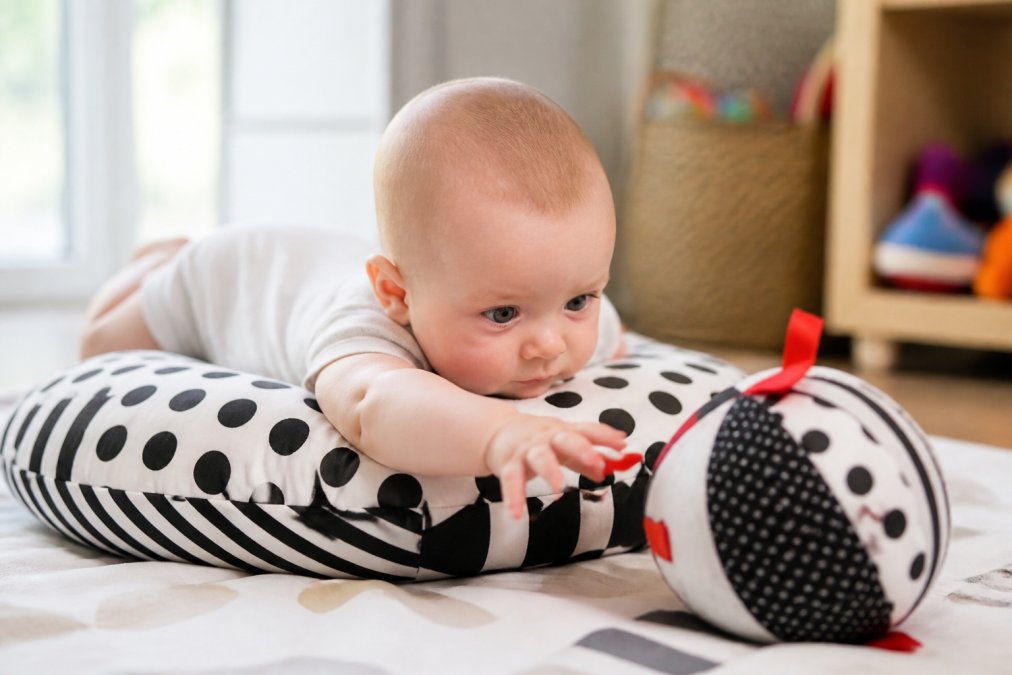
Newborns are sensory explorers building their world through sight, sound, and touch. High-contrast patterns, gentle sounds, and varied textures capture their attention as they develop visual focus and discover cause and effect through their own movements.
The Montessori Tummy Time Baby Pillow with Sensory Toys from Lulliyotoys features high-contrast details that stimulate early visual development and attached sensory toys that encourage reaching and grasping. Safety is essential at this age, anything within reach goes into the mouth, so non-toxic materials and secure construction are non-negotiable.

6 to 12 months: cause and effect
Around six months, babies become little scientists, dropping things to see what happens and fascinated by the connection between their action and the result. Soft blocks, sound-making toys, and textured objects support this emerging understanding. Fine motor skills develop rapidly as babies improve their grasp and learn to transfer objects between hands.
12 to 24 months: exploration and problem-solving
Mobile toddlers explore their environment in entirely new ways. Push-and-pull toys support gross motor development and coordination. The Montessori Wooden Pull Along Train Toy from Lulliyotoys helps toddlers develop balance and coordination while learning to pull toys while walking. Simple puzzles and shape sorters introduce early problem-solving. Language explodes during this period, so toys that make sounds and encourage interaction support language development naturally.
2 to 3 years: imaginative and symbolic play
By two years, children use objects to represent other things, a wooden block becomes a phone. This symbolic play signals readiness for complex, open-ended toys. Simple puzzles, building materials, and multi-use toys encourage creativity and cognitive growth. The Montessori Toddler Busy Board from Lulliyotoys offers multiple activities supporting fine motor development and independent exploration through everyday life skills.
Check Safety Standards for Children's Toys
Safety is the foundation. Before considering anything else, ensure toys meet rigorous safety standards and use materials you can trust.
Look for Australian Standards and certifications
In Australia, toys must comply with Australian Standards, primarily AS/NZS ISO 8124 series, which covers toy safety requirements including sharp edges, toxic substances, flammability, and choking hazards (standards.org.au). Look for certification marks indicating compliance. If a seller can't tell you what safety standards a toy meets, that's a red flag.
According to the Australian Competition and Consumer Commission (ACCC) toy safety guidelines, toys for children under three must meet specific requirements around durability, non-toxic finishes, and absence of small detachable parts. The ACCC regularly issues recalls, so checking their website before purchasing is wise.
Verify materials are non-toxic and lead-free
Non-toxic materials and lead-free finishes are essential, especially for babies and toddlers who mouth everything. Look for toys made from natural materials like sustainably sourced wood, organic cotton, or materials tested for harmful substances. Avoid toys with strong chemical smells, which indicate off-gassing of volatile organic compounds.
Lulliyotoys prioritises safe materials across its entire collection. Wooden toys are crafted from non-toxic wood with child-safe finishes, and fabric toys use materials meeting safety standards for children's products. Ask manufacturers directly about material testing if unsure. Reputable companies have documentation showing their products have been tested for lead, phthalates, and other harmful substances.
Choose Between Open-Ended and Structured Play
Structured toys have a defined purpose, a puzzle has one way to complete it, a shape sorter has specific shapes that fit specific holes. Open-ended toys can be used in countless ways: blocks, loose wooden pieces, natural materials.
Structured toys teach specific skills efficiently. Open-ended toys develop creativity, problem-solving, and imaginative thinking. The ideal approach is balance: structured toys teach specific skills, open-ended toys develop flexibility and creativity.
Benefits of Open-Ended Play for Development
Open-ended play is where genuine creativity happens. When a toy can be used in multiple ways, children direct the play themselves, building problem-solving skills and learning to trust their own thinking. This develops executive function, creativity, and confidence.
Sensory exploration is another benefit. Toys made from natural materials with varied textures invite richer learning experiences than uniform materials. Open-ended toys also grow with your child, wooden blocks work for a one-year-old learning to stack and knock down, and at three become building materials for imaginative structures. This longevity makes them genuinely economical.
Match Toys to Fine and Gross Motor Milestones
Motor development unfolds in a predictable sequence, and toys matching these milestones support natural progression.
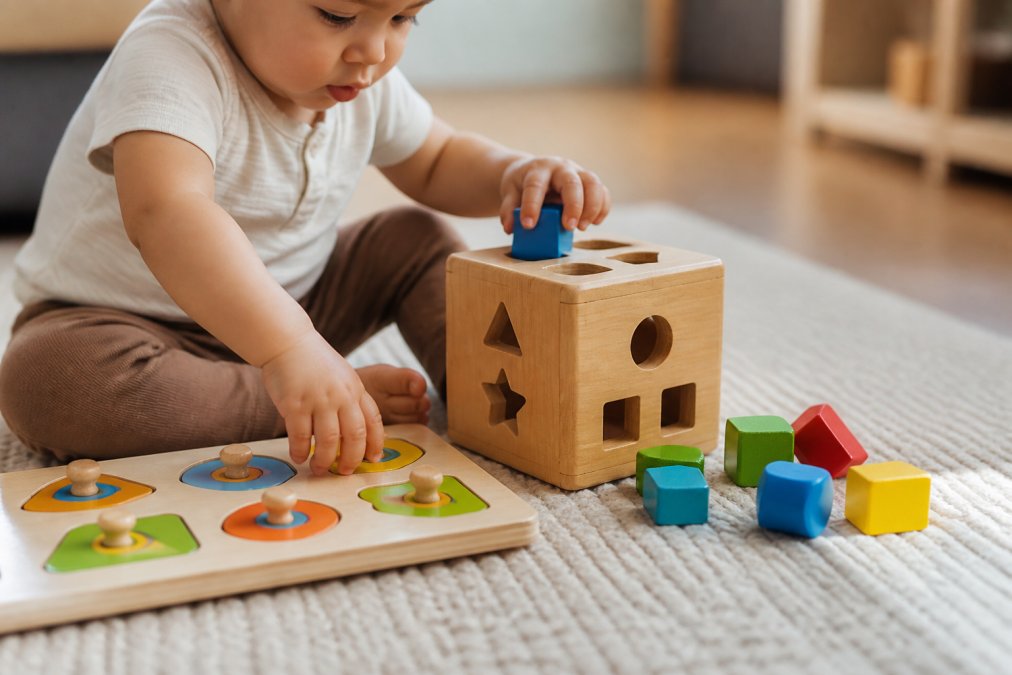
Fine motor skills develop gradually: babies learn to grasp, transfer objects between hands, develop a pincer grasp, and manipulate objects with precision. The Montessori Wooden Color & Shape Sorting Puzzle from Lulliyotoys supports this progression through hand-eye coordination and fine motor control.

Gross motor skills involve larger movements: rolling, sitting, crawling, walking, running. Push toys, pull toys, and climbing structures support gross motor development. The key is matching the toy's demands to your child's current abilities, the "zone of proximal development" where toys challenge them just slightly beyond what they can already do.
Priorise Sensory Exploration and Engagement
Sensory play is how young children learn about the world. Toys engaging multiple senses create richer learning experiences and support sensory development.
Textures matter: smooth, rough, bumpy, soft, varied textures invite exploration and support tactile development. Natural materials like wood, cotton, and wool offer sensory experiences plastic often can't match. High-contrast patterns support visual development, especially for young infants. Sound is another sensory dimension, toys making different sounds support auditory development. Sensory exploration also supports cognitive development by building neural connections and understanding of the physical world.
How to Rotate Toys for Toddlers Effectively
Rotating toys regularly keeps engagement fresh. When your child has access to every toy simultaneously, novelty wears off quickly. Divide toys into groups and rotate every two to four weeks, toys that were put away feel like new discoveries when they return.
Rotation teaches valuable skills: children learn to make choices within a smaller set and develop deeper engagement with fewer toys. It also makes cleanup simpler. Watch your child's engagement and rotate when interest drops.
Balance Quality with Budget-Conscious Choices
Developmentally appropriate toys don't require premium price tags. Strategic choices, DIY alternatives, and toy maintenance extend your budget and reduce waste.
The cost-per-use framework
Calculate cost-per-use instead of comparing upfront prices. A wooden toy costing $40 used daily for three years costs roughly $0.04 per use (peer-reviewed research). A plastic toy costing $15 that breaks after six months costs roughly $0.08 per use. Premium toys often deliver better value because they withstand repeated play and can be passed to younger siblings or sold secondhand.
Focus investment on toys your child will use frequently across multiple developmental stages: blocks, shape sorters, and pull toys are core toys worth premium prices. Budget options work fine for toys used occasionally.
DIY developmental toys from household items
Many developmentally valuable toys can be made from items you already have, costing almost nothing while reducing plastic consumption.
Sensory bottles: Fill clear plastic bottles with water, food colouring, and safe items like pasta or rice. Seal tightly. Cost: under $1 per bottle.
Treasure baskets: Fill a low basket with safe household items of varied textures: wooden spoons, fabric scraps, cardboard tubes, silicone muffin cups, clean sponges. Rotate items weekly. Cost: $0.
Stacking and nesting: Save containers of graduated sizes, yoghurt pots, takeaway containers, plastic bowls. Cost: $0.
Sound makers: Fill small sealed containers with different materials: rice, pasta, dried beans, bells. Cost: under $1 per container.
Threading activities: Thread large pasta onto string or thick yarn. Toddlers develop fine motor skills and hand-eye coordination. Cost: under $2.
Painting and mark-making: Offer washable paint, water, and large paper or cardboard. Cost: $3-5 for washable paint lasting months.
Obstacle courses: Use cushions, blankets, and furniture to create safe crawling and climbing challenges. Cost: $0.
Extending toy life through maintenance
Proper cleaning and repair significantly extend toy lifespan.
Wooden toys: Wipe with a damp cloth and air dry. For deeper cleaning, use a cloth dampened with one part white vinegar to three parts water. Avoid soaking wood. Store in a dry place to prevent mould and warping.
Fabric toys: Hand-wash in cool water with mild soap, then air-dry. Spot-clean toys that can't be fully submerged. Inspect regularly for loose seams and repair promptly.
Plastic toys: Wipe with a damp cloth or wash in warm soapy water. Dry thoroughly to prevent mould. Use an old toothbrush for crevices.
Sanitising: Wipe with a cloth dampened in one part white vinegar to one part water, or use dilute bleach solution (one part bleach to ten parts water) for plastic toys only. Rinse thoroughly and air dry.
Repair basics: Loose parts can be reattached with non-toxic wood glue or fabric glue. Cracked wood can be sanded smooth. Torn fabric can be hand-stitched or patched.
Strategic secondhand shopping
Secondhand toys cost 50-75% less than new and are often barely used. Check online marketplaces, local parent groups, and charity shops. Inspect for safety: no sharp edges, missing parts, or signs of damage or mould. Wash thoroughly before use. Avoid recalled toys or those with unclear safety history.
Toy rotation as a budget strategy
Rotating toys extends your collection's perceived value. With 20 toys but only 5 out at a time, your child experiences novelty every few weeks without new purchases. Rotation also teaches children to value and care for toys, when toys are precious, children treat them better.
When to invest in quality
Invest premium prices in toys used intensely for years: blocks, shape sorters, pull toys, and open-ended materials. Budget options work fine for toys used less frequently or that your child will outgrow quickly. Consider total cost of ownership: purchase price plus maintenance and longevity.
Select Toys That Support Neurodiversity
Neurodivergent children, including autistic children, children with ADHD, and children with sensory processing differences, often have distinct sensory profiles and play preferences that standard developmental guides don't address.
Understanding your child's sensory profile is foundational. Some children are sensory-seeking and require strong, consistent sensory input to feel regulated. Others are sensory-sensitive and become dysregulated by overstimulation. Many experience a mix: seeking input in one sensory channel while being sensitive in another.
Identifying sensory preferences
Observe your child's natural responses. Does your child seek spinning, swinging, or rocking? That's vestibular-seeking; toys providing movement support this need. Does your child cover their ears in response to certain sounds or avoid busy visual environments? That suggests auditory or visual sensitivity; quieter toys with simpler designs work better. Does your child enjoy deep pressure, like being wrapped in blankets or squeezing toys? That's proprioceptive-seeking; weighted toys or resistance toys support this need.
Keep a simple log for a week noting which toys your child gravitates toward, engagement duration, and sensory qualities they seek. Patterns will reveal your child's actual sensory profile.
Toys for sensory-seeking children
Children seeking strong sensory input benefit from toys providing consistent, predictable feedback. Fidget toys with varied resistances, spinning toys, and toys requiring sustained pressure provide the input many neurodivergent children find regulating. Cause-and-effect toys are particularly valuable because they provide immediate, repeatable sensory feedback, when a button press produces a sound every time, that predictability is calming.
Toys for sensory-sensitive children
Sensory-sensitive children often need toys offering controlled, gentle input. Soft, textured toys without loud sounds work better than noisy toys. Toys with muted colours or simple visual designs reduce visual overwhelm. Open-ended toys are often ideal because there's no pressure to engage in a specific way, your child can explore at their own speed.
Toys that support focus and regulation
Many neurodivergent children benefit from toys supporting sustained attention or providing a focal point for stimming. Fidget toys give hands something to do, often improving focus during other activities. Toys with repetitive, predictable actions can be deeply regulating. Avoid toys with multiple competing sensory inputs if your child is easily overwhelmed.
Neurodiversity-friendly toy features
When evaluating toys for a neurodivergent child, consider:
Predictability: Does the toy respond the same way every time? Consistent cause-and-effect toys are more engaging than variable responses.
Simplicity: Can your child understand how to use the toy without complex instructions? Single-function toys often work better than multi-purpose toys.
Sensory intensity control: Can your child control how much sensory input they receive? Toys where the child decides the pace support self-regulation.
Durability: Neurodivergent children sometimes engage more intensely or repetitively. Toys withstanding vigorous use are more practical.
Quiet operation: Unless your child is sensory-seeking for sound, toys without electronic sounds or with volume control reduce overwhelm.
Avoiding common pitfalls
Don't assume toys marketed as "sensory" will work for your child. Many are designed for neurotypical sensory development and may not match your child's actual profile. Avoid toys with flashing lights or unpredictable sounds if your child is sensory-sensitive. Similarly, avoid toys requiring social interaction or turn-taking if your child prefers solitary play, there's no developmental deficit in preferring independent play.
Consider your child's individual profile, not age recommendations or marketing claims. A neurodivergent three-year-old might genuinely prefer toys typically marketed for one-year-olds if those match their sensory needs and play style. That's good toy selection, not developmental delay.
=== FAQ ANSWERS (audit these too, same rules) ===
[1] Q: What are the key indicators of a developmentally appropriate toy? A: A developmentally appropriate toy matches your child's current abilities and interests, supports specific milestones like fine motor skills or problem-solving, and encourages exploration. Look for toys that are age-appropriate, made from non-toxic materials, and align with your child's developmental stage. The best toys grow with your child, they shouldn't be too simple or too frustrating. Montessori-inspired designs often excel here because they're intentionally created to support natural learning progression.
[2] Q: Are there specific safety standards for children's toys in Australia? A: Yes. All toys sold in Australia must comply with Australian Standards, particularly AS/NZS ISO 8124 for toy safety. This covers hazards like small parts, sharp edges, toxic materials, and flammability. Look for toys certified as lead-free and non-toxic. Always check product labels for certifications and avoid toys with loose parts, strong chemical smells, or peeling paint.
[3] Q: How do I know if a toy encourages sensory play and development? A: Sensory toys engage multiple senses: touch (different textures), sound (gentle rattles or music), sight (high-contrast patterns or colours), and sometimes smell or taste-safe exploration. For infants, toys with varied textures, high-contrast designs, and safe materials support early visual focus and tactile development. For toddlers, toys that make sounds, have moving parts, or offer different materials encourage sensory exploration. The Montessori Tummy Time Baby Pillow with sensory toys, for example, combines high-contrast patterns with tactile elements to support this development.
[4] Q: What's the best way to rotate toys so my child stays engaged? A: Toy rotation keeps play fresh and prevents overwhelm. Start with 5-8 toys available at once, rotating others away monthly. This approach helps children focus deeply on fewer options, encourages problem-solving, and reduces decision fatigue. Rotate based on your child's current interests and developmental stage, if they've mastered a skill, introduce toys that challenge the next milestone. Many families find that rotating toys every 4-6 weeks maintains novelty without requiring constant new purchases, making it budget-friendly and developmentally sound.
Frequently Asked Questions
What are the key indicators of a developmentally appropriate toy?
A developmentally appropriate toy matches your child's current abilities and interests, supports specific milestones like fine motor skills or problem-solving, and encourages exploration. Look for toys that are age-appropriate, made from non-toxic materials, and align with your child's developmental stage. The best toys grow with your child, they shouldn't be too simple or too frustrating. Montessori-inspired designs often excel here because they're intentionally created to support natural learning progression.
Are there specific safety standards for children's toys in Australia?
Yes. All toys sold in Australia must comply with Australian Standards, particularly AS/NZS ISO 8124 for toy safety. This covers hazards like small parts, sharp edges, toxic materials, and flammability. Look for toys certified as lead-free and non-toxic. Always check product labels for certifications and avoid toys with loose parts, strong chemical smells, or peeling paint.
How do I know if a toy encourages sensory play and development?
Sensory toys engage multiple senses: touch (different textures), sound (gentle rattles or music), sight (high-contrast patterns or colours), and sometimes smell or taste-safe exploration. For infants, toys with varied textures, high-contrast designs, and safe materials support early visual focus and tactile development. For toddlers, toys that make sounds, have moving parts, or offer different materials encourage sensory exploration. The Montessori Tummy Time Baby Pillow with sensory toys, for example, combines high-contrast patterns with tactile elements to support this development.
What's the best way to rotate toys so my child stays engaged?
Toy rotation keeps play fresh and prevents overwhelm. Start with 5-8 toys available at once, rotating others away monthly. This approach helps children focus deeply on fewer options, encourages problem-solving, and reduces decision fatigue. Rotate based on your child's current interests and developmental stage, if they've mastered a skill, introduce toys that challenge the next milestone. Many families find that rotating toys every 4-6 weeks maintains novelty without requiring constant new purchases, making it budget-friendly and developmentally sound.
This article was written using GrandRanker