

Montessori Toy Progression for Homeschoolers: A 2026 Guide
Table of Contents
- What Makes a Toy Truly Montessori?
- Montessori Toy Progression by Age: Birth to Five Years
- How to Foster Independent Play Through Material Selection
- Practical Life Activities vs. Traditional Toys: Why the Difference Matters
- The Benefits of Open-Ended Toys for Toddlers in a Homeschool Setting
- Montessori Shelf Rotation Schedule: Keeping Materials Fresh and Engaging
- Natural Materials and Sensory Development in Early Childhood
- Fine Motor Skill Development Through Purposeful Work
- DIY vs. Purchased Materials: Cost-Benefit Analysis for Homeschooling Families
- Storage and Organisation for Small Spaces
- Tracking Developmental Milestones as Your Child Progresses
- How to Choose Montessori-Aligned Materials for Your Homeschool
- Conclusion: Building a Purposeful Learning Environment
Last Updated: August 29, 2026
What Makes a Toy Truly Montessori?
A Montessori toy is purposeful work designed for a child's specific developmental stage, not entertainment disguised as learning. True Montessori toys are open-ended, isolate a single concept, use natural materials like wood or metal, and scale appropriately for small hands without distracting decorations or noise.
What separates Montessori materials from traditional toys is intentionality. A standard toy entertains passively. A Montessori toy invites active concentration and problem-solving. When your child sits with a wooden puzzle, they're solving a problem, building spatial awareness, and developing persistence, that shift from passive to active engagement is where real learning happens.
At Lulliyotoys, we design materials around this philosophy. Each toy targets a specific developmental window and skill set. The Montessori Wooden Colour & Shape Sorting Puzzle isolates colour recognition and shape discrimination without overwhelming the child with too many variables.

Montessori Toy Progression by Age: Birth to Five Years
Montessori toy progression follows the child's developmental readiness. Each stage builds on the previous one, creating natural scaffolding of skills. Understanding this progression prevents offering toys too advanced (which frustrates) or too simple (which bores).
Birth to 6 months: Sensory foundations
Newborns are sensory explorers. High-contrast black-and-white cards, gentle wooden rattles, and soft fabric textures are ideal. Babies don't need multiple toys; they need quality sensory input. A single wooden rattle teaches more than a basket of plastic toys with flashing lights (peer-reviewed research).
Cause-and-effect is beginning to form. When a baby shakes a rattle and hears sound, they're starting to connect action to result. Movement is crucial, babies should have freedom to reach, grasp, and explore. A low play mat with a few carefully chosen items invites this exploration far better than a busy gym with dangling toys everywhere.
6 to 12 months: Cause-and-effect discovery
Around six months, babies become fascinated by what happens when they act. Drop a toy, it falls. Bang a drum, it makes sound. Toys that respond to the baby's actions are essential: wooden blocks that stack and tumble, soft balls that roll, simple shakers.
Fine motor skills are emerging. Toys that invite reaching, grabbing, and transferring from one hand to another support development. Repetition is everything at this age, babies will perform the same action dozens of times. This isn't boredom; it's how they consolidate learning.
12 to 24 months: Practical life and fine motor skills
Between one and two years, toddlers become fascinated by real-world activities. They want to pour, sweep, sort, arrange. This is the perfect window for practical life toys that mirror everyday tasks.
Wooden sorting toys, shape-matching puzzles, and stacking materials become central. The Montessori Wooden Bear Shape Sorting & Stacking Toy combines multiple skills, colour recognition, shape discrimination, hand-eye coordination, and fine motor control, without overwhelming the child.
Fine motor skills advance rapidly. The pincer grasp (thumb and forefinger) is developing, allowing more precise manipulation (the CDC). Beads to thread, pegs to place, shapes to sort support this development. Language is exploding too, toys that invite naming colours, shapes, and animals support vocabulary development.
24 to 36 months: Sorting, matching and problem-solving
Between two and three years, children can hold multiple concepts simultaneously. Sorting becomes more complex, not just by colour, but by colour and shape together. Problem-solving emerges as a genuine skill.
Sequencing begins here too. Understanding that steps follow a logical order is foundational for later learning. Toys that invite sequencing, like stacking rings in order of size, build this skill. Independence grows significantly, a child this age can follow a two- or three-step instruction and work through a task without constant adult intervention.
36 to 60 months: Cognitive complexity and independence
From three to five years, children are ready for genuinely complex problem-solving. Multi-step puzzles and materials that invite experimentation become appropriate.
The Montessori Toddler Busy Board is excellent for this stage because it combines multiple skills and activities in one material. Abstract thinking is emerging, a child can now understand that a symbol represents something else, that a number means a quantity, that a letter represents a sound (peer-reviewed research).
Collaboration and social skills are developing. Children this age can work alongside peers, share materials, and follow group instructions. Purposeful work becomes genuinely purposeful, a child this age isn't just manipulating materials for sensory input; they're working toward mastery.
How to Foster Independent Play Through Material Selection
Independent play is cultivated through deliberate material choices that invite concentration and allow the child to work without constant adult direction.
The foundation is simplicity. A shelf with five carefully chosen, developmentally appropriate materials teaches a child that focus is possible and mastery is achievable. Accessibility is crucial, materials should be stored at the child's eye level in clear containers or on open shelves. A two-year-old who can see and reach their materials independently will work longer and more focused than one who needs to ask an adult for each toy.
Material rotation maintains novelty and engagement without requiring constant purchases. A child who sees the same five toys every day will eventually lose interest. Rotating materials every few weeks maintains engagement. Incomplete materials invite deeper engagement, a puzzle with one piece missing invites problem-solving; a basket of mixed beads and strings invites creative sequencing.
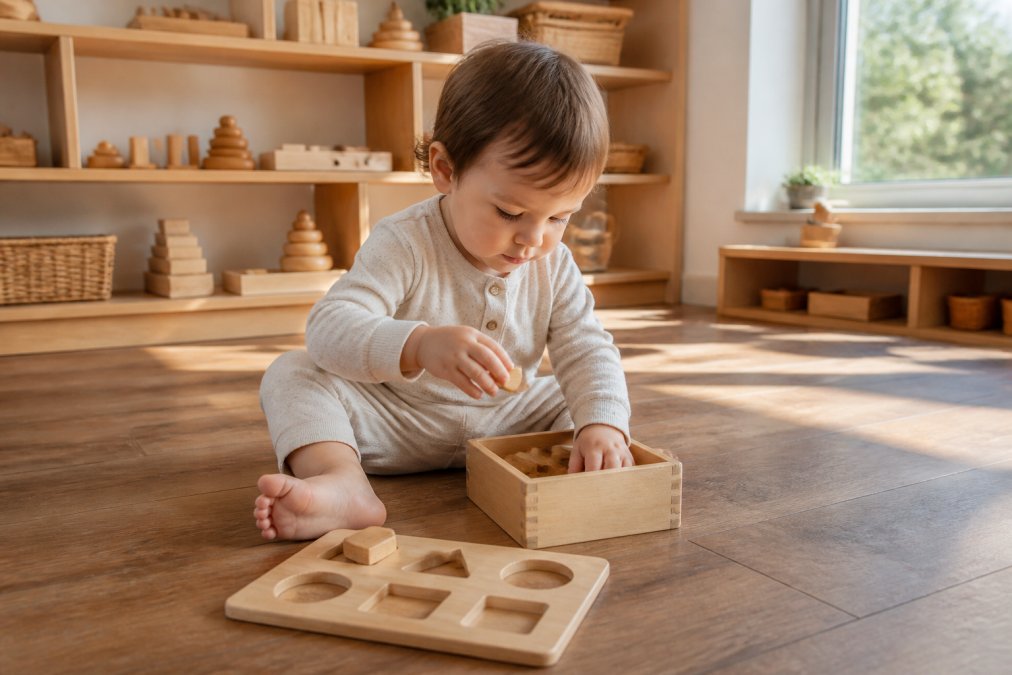
At Lulliyotoys, the Montessori Wooden Rainbow Blocks - 12-Piece Arch Stacking Toy has no "right" way to use it. A child might stack them in a tower, arrange them by colour, build a bridge, or create a pattern. This open-endedness means the toy grows with the child and invites repeated, sustained engagement.

The prepared environment extends beyond toys themselves. It includes the space where materials are stored, lighting, noise level, and freedom from interruption. A quiet, calm space with minimal visual clutter invites the deep concentration that Montessori work requires.
Practical Life Activities vs. Traditional Toys: Why the Difference Matters
Practical life activities are designed around real-world tasks that adults perform daily: pouring, sorting, sweeping, arranging, fastening. A child engaging with practical life materials is mimicking meaningful adult work, which satisfies a deep developmental need.
Practical life activities build competence and independence in ways traditional toys cannot. When a child successfully pours water from one container to another without spilling, they've accomplished something real. They're not just entertained; they're genuinely capable. This builds confidence and intrinsic motivation.
Practical life materials also develop concentration in ways traditional toys rarely do. A child sorting buttons by colour is working toward a goal, completing the task. This purposefulness invites sustained focus. The sensory feedback differs too, practical life materials use real objects, actual water, real buttons, genuine wooden pegs. This authentic sensory input teaches the child about how the world actually works.
Montessori toy progression integrates practical life activities throughout. The Montessori Toddler Busy Board includes practical life elements, fastening, unfastening, matching, alongside more traditional puzzle-like activities.

The Benefits of Open-Ended Toys for Toddlers in a Homeschool Setting
Open-ended toys are the backbone of effective homeschool Montessori practice because they adapt to your child's changing needs and developmental stage. A wooden block set used by a one-year-old to knock over is the same set used by a four-year-old to build a complex structure. The material doesn't change; the child's engagement with it deepens.
Open-ended toys accommodate different learning styles and interests within a single material. One child might use blocks to build towers; another might use them to create patterns. The material doesn't dictate the learning path; the child does. This flexibility is particularly valuable in homeschooling because it allows you to follow the child's lead.
Open-ended toys also invite problem-solving in ways closed-ended toys cannot. A puzzle with a single solution is solved; that's the end of it. A basket of loose parts invites endless problem-solving. How can these be arranged? What structures can be built? What patterns can be created?
The Montessori Wooden Rainbow Blocks exemplify this principle. They're not a puzzle with a "right" answer. They're materials that invite exploration, creativity, and problem-solving. A child might spend twenty minutes building with them, trying different arrangements, testing balance, discovering cause-and-effect as structures fall and are rebuilt.
Montessori Shelf Rotation Schedule: Keeping Materials Fresh and Engaging
Shelf rotation is one of the most underrated strategies in Montessori homeschooling. A toy that's always available gradually becomes invisible. Remove it for three weeks, then reintroduce it, and suddenly it's new again. The child engages with it as if they've never seen it before, often at a deeper level.
Rotation also prevents accumulation without creating constant purchasing stress. Instead of buying new materials constantly, cycle through a collection of quality items. A collection of thirty high-quality materials rotated thoughtfully provides more engagement than one hundred mediocre toys available simultaneously.
A practical rotation schedule: divide your collection into three groups. Group A is on the shelf for three weeks. At week three, Group A goes into storage and Group B comes onto the shelf. After another three weeks, Group B goes into storage and Group C comes out. By the time Group C has been on the shelf for three weeks, Group A has been out of sight long enough to feel novel again.
Observation informs rotation timing. If a material is still deeply engaging after three weeks, leave it out longer. If a material has lost engagement after two weeks, rotate it sooner. The schedule is a guideline, not a rigid rule.
At Lulliyotoys, we recommend building a collection with rotation in mind. Rather than buying one of everything, consider buying two or three core materials and rotating them thoughtfully. Each reintroduction deepens the child's engagement because they're approaching it with new developmental capabilities.
Natural Materials and Sensory Development in Early Childhood
The choice between natural and synthetic materials is genuinely developmental. Natural materials, wood, metal, cotton, wool, provide sensory feedback that plastic cannot replicate.
Wood has weight, warmth, and texture that plastic toys lack. When a child holds a wooden block, they're receiving authentic sensory information about density, temperature, and material properties. Metal provides different sensory input, the cool temperature of a metal ring, the specific weight of a metal object, the sound it makes when it strikes wood.
Natural fibres like cotton and wool invite tactile exploration. A child running their fingers across a wool blanket or cotton fabric is engaging their tactile sense in ways plastic cannot match. Synthetic materials provide muted sensory feedback, plastic toys tend to feel similar regardless of their purpose.
There's also a psychological dimension. Natural materials convey care and intentionality. A wooden toy suggests that an adult chose this material specifically for the child. Sustainability matters too, natural materials are renewable and biodegradable, teaching children implicitly that we're part of a natural world with finite resources.
Fine Motor Skill Development Through Purposeful Work
Fine motor skills, the ability to control small hand movements with precision, are foundational to later academic success. A child who can manipulate small objects with control will find writing, drawing, and detailed work easier.
Purposeful work develops fine motor skills more effectively than random play because the work has a goal. The child is trying to accomplish something specific: fitting a peg into a hole, threading a bead onto a string, placing a puzzle piece. This goal-directed activity invites the precise hand control that builds fine motor competence.
The pincer grasp (thumb and forefinger working together) is particularly important. This specific grasp is necessary for holding a pencil, using scissors, and performing detailed work. Toys that require the pincer grasp to manipulate small pieces develop this specific skill.
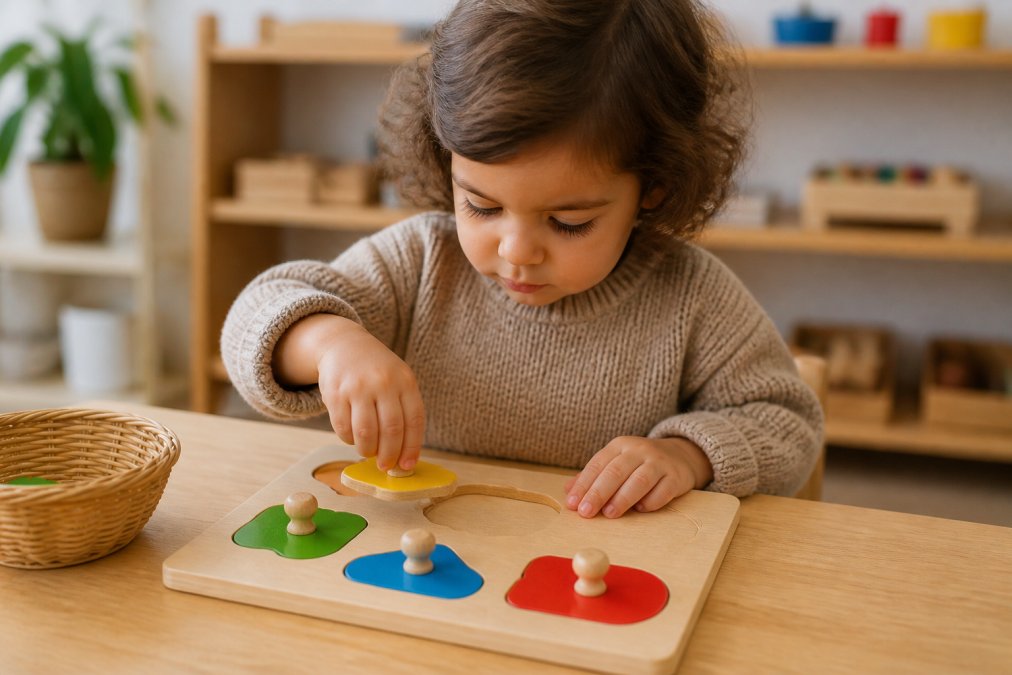
Hand-eye coordination develops through materials that require visual accuracy and manual precision. A child placing a shape into a matching hole must see the shape, judge its orientation, and manipulate their hand to align it correctly. Repetition builds competence, a child who places pegs into holes repeatedly, over days and weeks, is building genuine skill.
At Lulliyotoys, materials like the Montessori Toddler Busy Board are specifically designed to develop fine motor skills through purposeful work. The various activities, fastening, matching, puzzle-solving, all require precise hand control and invite repetition. A child working with this material for sustained periods is building genuine fine motor competence.
DIY vs. Purchased Materials: Cost-Benefit Analysis for Homeschooling Families
For homeschooling families, the DIY versus purchased decision isn't binary. The most effective approach is strategic: purchase core materials that form the backbone of your curriculum, DIY supplementary materials that add customisation and depth.
Core Materials Worth Purchasing
Shape and Colour Recognition Materials Purchased: Montessori Wooden Colour & Shape Sorting Puzzle ($23.00) Why: Pieces are precisely sized for small hands, difficulty is calibrated for the developmental stage, and the material lasts through multiple children. DIY versions using cardboard rarely survive repeated use. Decision: Purchase; used from 12 months through 4 years across multiple learning objectives.
Fine Motor Skill Materials (Peg Boards, Threading, Fastening) Purchased: Montessori Toddler Busy Board ($30.00) Why: Multiple activities in one material, each precisely designed for specific fine motor skills. A child uses this material intensively from 18 months through 4 years. Decision: Purchase; the safety, durability, and design justify the cost for a material used daily.
Stacking and Nesting Materials (Rings, Blocks, Arches) Purchased: Montessori Wooden Rainbow Blocks - 12-Piece Arch Stacking Toy ($42.00) Why: Wood is smooth and splinter-free, pieces are weighted appropriately, and the material invites open-ended play from 12 months through 5+ years. Decision: Purchase; this material your child will use for years, and quality matters for both safety and engagement.
Practical Life Materials (Pouring, Sorting, Sweeping) Purchased: Child-sized broom, dustpan, pouring jugs (around $15-$40 total) Why: Child-sized tools are essential; adult-sized tools are frustrating and unsafe. Decision: Purchase child-sized tools; they're non-negotiable for practical life work.
Supplementary Materials Worth DIYing
Sensory Bins and Exploration Materials DIY: Dried beans, rice, or pasta in a shallow container with scoops and small toys (around $2-$5) Why: Contents can be changed monthly based on your child's interests. Customisation is impossible with purchased materials. Decision: DIY; the low cost and high customisation value justify the time investment.
Sorting and Matching Activities DIY: Buttons sorted by colour into muffin tins, shells sorted by size into containers (around $0-$3) Why: These materials are often used for 2-4 weeks before the child masters them. Creating new sorting activities as your child progresses is more cost-effective than purchasing. Decision: DIY; create new sorting activities as your child's skills develop.
Colour and Pattern Recognition Materials DIY: Coloured paper cards, fabric swatches, paint samples arranged by shade (around $0-$2) Why: Easy to create and customisable to your child's current learning focus. Decision: DIY; these are quick to create and highly customisable.
Loose Parts and Open-Ended Materials DIY: Wooden blocks, metal rings, fabric scraps, natural items (around $0-$5) Why: Loose parts are infinitely customisable and invite open-ended play. Decision: DIY; gather materials from nature and your home.
Materials to Avoid DIYing
Puzzles with Multiple Pieces Why not: Homemade puzzles often have rough edges or pieces that don't fit precisely. A child working with a poorly made puzzle becomes frustrated rather than engaged. Purchased: Wooden puzzles with 4-12 pieces (around $15-$35). Worth the investment because they're used repeatedly and precision matters.
Materials with Small Parts Why not: Safety becomes critical. Purchased materials are tested for choking hazards; DIY materials require careful assessment. Purchased: Threading beads, peg boards (around $10-$25). The safety testing justifies the cost.
Materials Requiring Precise Calibration Why not: Some Montessori materials require precise sizing and finishing. A DIY version may look similar but won't provide the same learning experience. Purchased: Montessori-aligned number rods, sandpaper letters (around $20-$50). The precision justifies the cost for materials used across multiple years.
The Hybrid Model: A Practical Framework
Year 1 (Birth-12 months): around $80-$150 Purchase: High-contrast cards, wooden rattles, simple stacking rings (around $40-$60) DIY: Sensory baskets with household items (around $0-$20)
Year 2 (12-24 months): around $120-$200 Purchase: Shape sorter, peg board, practical life tools (around $80-$120) DIY: Sorting activities, sensory bins, colour-matching materials (around $0-$30)
Year 3 (24-36 months): around $100-$180 Purchase: Multi-piece puzzles, stacking/nesting materials (around $60-$100) DIY: Practical life activities, loose parts, matching games (around $0-$30)
Year 4+ (36-60 months): around $80-$150 Purchase: Complex puzzles, materials bridging concrete and abstract (around $50-$100) DIY: Open-ended building materials, sensory exploration, customised learning activities (around $0-$30)
Cost-Benefit Decision Tree
When deciding whether to purchase or DIY a specific material, ask:
- Will this material be used repeatedly across multiple developmental stages? (Yes → Purchase; No → DIY)
- Does this material require precision or safety testing? (Yes → Purchase; No → DIY)
- Can I customise this material to match my child's current interests? (Yes → DIY; No → Purchase)
- Do I have the time and materials to create this DIY? (Yes → DIY; No → Purchase)
- Will this material need to be replaced frequently? (Yes → DIY; No → Purchase)
Example: A shape sorter. Repeated use across 12-48 months (Yes → Purchase). Requires precision (Yes → Purchase). Can't be easily customised (No → DIY). Time-intensive to create (No → Purchase). Won't need frequent replacement (No → DIY). Decision: Purchase.
Example: A sorting activity. Used for 2-4 weeks (No → DIY). Doesn't require precision (No → DIY). Highly customisable (Yes → DIY). Quick to create (Yes → DIY). Will be replaced as child progresses (Yes → DIY). Decision: DIY.
Calculating True Cost Over Time
When evaluating whether to purchase, calculate cost per use over the material's lifespan.
Example: Montessori Wooden Rainbow Blocks ($42.00, used from 12 months through 5 years = 48 months) Cost per month: $0.88. If used 4 times per week: Cost per use = $0.04
Example: DIY sensory bin (around $3, used for 4 weeks) Cost per month: $0.75. If used 4 times per week: Cost per use = $0.04
Both have similar cost-per-use, but the purchased material lasts longer and provides more consistent engagement. Over four years, the purchased material serves multiple purposes; the DIY material serves one purpose for one month.
Storage and Organisation for Small Spaces
Storage challenges are real for many homeschooling families. The key is organisation that maximises accessible materials while minimising visual clutter.
Low, open shelving is ideal. Materials stored at the child's eye level invite independent access and engagement. Even in small spaces, a single low shelf can hold a surprising amount of material when organised thoughtfully.
Clear containers or open baskets help too. When materials are visible, children engage with them more. Transparent containers allow the child to see what's inside without opening them. Vertical storage uses space efficiently, wall-mounted shelves and hanging organisers maximise limited floor space.
Rotation becomes even more important in small spaces. Rather than storing all materials permanently, rotate them. This reduces the number of materials visible at any time, keeping the space visually calm while maintaining access to a larger overall collection.
Labelling helps with organisation and teaches the child that materials have designated places. Simple picture labels on shelves or containers help even young children understand where materials belong, building independence and responsibility.
The goal is a prepared environment that invites engagement without overwhelming. A small, well-organised space with carefully chosen materials is more effective than a large, cluttered space with excessive toys.
Tracking Developmental Milestones as Your Child Progresses
Observation is central to Montessori practice. For homeschoolers, observation must be purposeful and linked to material decisions. Track milestones alongside material engagement to connect what you observe to what you introduce next.
Observable Milestones and Material Readiness
Sensory and Motor Milestones:
- Pincer grasp emerging (8-12 months): Child can pick up small objects between thumb and forefinger. Material signal: Introduce threading activities, peg boards, and small-piece sorting.
- Sitting independently (6-8 months): Child can sit without support for sustained periods. Material signal: Introduce materials requiring seated focus, like stacking rings or cause-and-effect toys.
- Walking independently (12-15 months): Child moves around the environment freely. Material signal: Introduce practical life activities requiring movement, like carrying, pouring, and sweeping.
- Climbing and balance (18-24 months): Child climbs stairs and tests balance. Material signal: Introduce materials requiring fine motor control in seated positions.
Cognitive Milestones:
- Object permanence (6-12 months): Child understands that hidden objects still exist. Material signal: Introduce hiding games and simple cause-and-effect toys.
- Cause-and-effect understanding (6-18 months): Child deliberately repeats actions to produce results. Material signal: Introduce materials with clear, immediate feedback: drums, balls, ramps, shakers.
- Problem-solving emerges (18-24 months): Child tries multiple approaches to solve a problem. Material signal: Introduce puzzles with 2-4 pieces and shape sorters.
- Symbolic thinking (24-36 months): Child understands that objects represent other things. Material signal: Introduce open-ended materials that invite pretend play alongside Montessori work.
- Sequencing and planning (30-48 months): Child understands that steps follow a logical order. Material signal: Introduce materials with sequences like stacking rings by size or arranging by colour gradation.
Creating an Observation Journal for Material Decisions
A simple weekly log transforms observation into actionable data. For each material your child engages with, record:
- Material name and date introduced
- Duration of engagement
- Type of engagement (Repetitive? Problem-solving? Exploratory?)
- Apparent skill level (Mastering? Challenged? Bored?)
- Next action (Keep on shelf? Rotate out? Introduce a more advanced version?)
Over four weeks, patterns emerge. A material your child engages with for 15+ minutes across multiple sessions is developmentally appropriate and should stay on the shelf. A material they abandon after 2-3 minutes might be too advanced or not aligned with their current interests.
Photographing and Reviewing Progress
Weekly photographs or short videos (30 seconds) of your child working reveal details you miss in real-time. Review footage monthly and note:
- Is the pincer grasp more refined than last month?
- Is concentration duration increasing?
- Are problem-solving approaches more sophisticated?
- Is the child attempting tasks they previously avoided?
These visual records provide concrete evidence of progress and help you make confident material decisions.
Red Flags: When a Material Isn't Working
If a child consistently avoids a material, becomes frustrated, or uses it chaotically rather than purposefully, the material may not match their current stage. Remove the material, observe what they are engaging with, and choose materials that match that engagement level.
Conversely, if a child masters a material quickly and seeks more challenge, progression is needed. A child who completes a 4-piece puzzle in 2 minutes is ready for 6-8 pieces.
How to Choose Montessori-Aligned Materials for Your Homeschool
Start with your child's current developmental stage. Review the progression by age outlined earlier in this guide. What stage is your child in? What skills are they developing? What materials support those skills?
Consider the qualities of truly Montessori materials. Is the material open-ended or does it have a single predetermined use? Does it isolate a single concept or mix multiple skills? Is it made from natural materials? Is it appropriately scaled for your child's size? Does it invite concentration or constant novelty-seeking?
Observe your child's interests and current engagement. What materials do they return to repeatedly? What skills are they practising intensively? These observations guide your next purchases. A child fascinated by sorting is ready for more sophisticated sorting materials. A child developing fine motor skills needs materials that invite precise hand control.
Quality matters more than quantity. A single high-quality wooden puzzle invites deeper engagement than five mediocre plastic toys. Build your collection slowly with materials you genuinely believe in rather than rushing to fill shelves with everything available.
At Lulliyotoys, we've curated a collection specifically for this purpose. The Montessori Toddler Busy Board, the Montessori Wooden Colour & Shape Sorting Puzzle, the Montessori Wooden Bear Shape Sorting & Stacking Toy, and the Montessori Wooden Rainbow Blocks - 12-Piece Arch Stacking Toy represent core materials that support development across multiple stages.
When evaluating materials, ask yourself: Would I want to use this? Does it feel beautiful and well-made? Does it invite concentration or constant stimulation-seeking? Can my child use it independently? These questions help you distinguish between materials that genuinely support development and those that are simply marketed well.
Conclusion: Building a Purposeful Learning Environment
Building a Montessori homeschool for your child isn't about accumulating every available toy or following a rigid curriculum. It's about creating an environment where your child can engage in purposeful work, develop genuine competence, and experience the satisfaction of independent learning.
The materials you choose are the foundation of this environment. They should be developmentally appropriate, made from natural materials, open-ended enough to grow with your child, and beautiful enough to invite engagement. They should support the skills your child is developing while remaining accessible for independent work.
Observation is your guide. Watch where your child concentrates, what they return to, what challenges them, and what they master. Let these observations inform your material choices and your progression through developmental stages.
Montessori toy progression doesn't require perfection or unlimited budgets. It requires intention, observation, and quality materials that genuinely support your child's development. At Lulliyotoys, we've designed our collection specifically for homeschooling families who want to build a prepared environment without overwhelming complexity. Start with core materials like the Montessori Toddler Busy Board or the Montessori Wooden Rainbow Blocks - 12-Piece Arch Stacking Toy, observe your child's engagement, and build from there. The result is a learning environment where your child can develop confidence, independence, and genuine love of learning.
Frequently Asked Questions
Q: What age should you start introducing Montessori toys?
A: You can introduce Montessori-aligned materials from birth, starting with high-contrast visuals and simple sensory objects for newborns. At 6 months, introduce cause-and-effect toys. Around 12 months, add practical life materials and fine motor activities. The key is matching toys to your child's developmental stage rather than age alone. Watch for readiness cues: grasping, reaching, sustained focus, and interest in everyday activities.
Q: How does a toy progression support independent play in homeschoolers?
A: A thoughtful progression builds skills sequentially, allowing children to master one concept before moving to the next. This creates confidence and intrinsic motivation, your child learns to work independently because materials are developmentally appropriate and engaging. Homeschoolers benefit especially because you can observe your individual child's pace and adjust the prepared environment accordingly. Rotating materials keeps the environment fresh without overwhelming choices.
Q: What is the 20 toy rule in a Montessori-inspired home?
A: The 20 toy rule suggests limiting toys to around 20 quality items at any given time, rotating others seasonally. This reduces decision fatigue, encourages deeper engagement, and prevents the scattered attention that comes with too many options. For homeschoolers, this principle helps create a calm, focused learning space. Quality matters more than quantity, fewer, well-chosen materials support concentration and purposeful work better than shelves overflowing with options.
Q: What safety standards should Montessori toys meet?
A: In Australia, toys must comply with the Consumer Protection Notice (Safety) 2009 and Australian Standards AS/NZS 1088 for toy safety. Look for toys made from non-toxic, FSC-certified wood, with no small parts for children under 36 months. Reputable Montessori toy makers test for lead, phthalates, and other harmful substances. Always check product certifications and choose materials that are washable and durable, quality toys that last longer are safer and more sustainable.
Q: How many toys should a child have in a Montessori-inspired home?
A: Most Montessori educators recommend 5 to 10 toys on the shelf at any time, with additional materials rotated monthly. For homeschoolers with multiple children, you might keep slightly more available, but the principle remains: fewer, carefully selected items encourage concentration and purposeful work. Too many toys scattered around create visual chaos and fragment attention. Rotating materials keeps engagement high without needing to purchase constantly.
Q: Can I use Montessori toys if I'm not doing a full Montessori curriculum?
A: Absolutely. Montessori-aligned toys support any educational approach because they're designed around how young children actually learn: through sensory exploration, hand-on discovery, and purposeful work. You don't need a formal Montessori program to benefit from materials that encourage fine motor skills, problem-solving, and independence. Many homeschoolers blend Montessori principles with other methods, using these toys as part of a broader, child-led learning environment.
Q: Why are Montessori toys more expensive than mass-produced alternatives?
A: Montessori toys are crafted from quality materials, FSC-certified wood, non-toxic finishes, and durable construction, designed to last years and withstand repeated use. They're made to support specific developmental skills rather than entertain passively. The higher cost reflects safety testing, sustainable sourcing, and thoughtful design. For homeschoolers, these toys often represent a better long-term investment because they grow with your child, can be passed to siblings, and maintain engagement through careful progression rather than novelty.
This article was written using GrandRanker